












News


 Agrade Storage Editorial Team
  2026-05-29 16:00:04
 3D NAND Technology in Industrial Storage: Benefits and Challenges
In the world of industrial computing, storage is not just about capacity. It is about endurance, reliability, and the ability to withstand harsh environments. For decades, planar NAND flash dominated the landscape, but as process nodes shrank, the physical limits of scaling became a barrier. Enter 3D NAND technology, a revolutionary architecture that stacks memory cells vertically instead of shrinking them horizontally. This article explores the benefits and challenges of 3D NAND in industrial storage, and how Agrade Storage leverages this technology to deliver robust industrial SSD solutions.
What Is 3D NAND Technology?
3D NAND, also known as vertical NAND or V-NAND, is a type of flash memory where memory cells are stacked in multiple layers (e.g., 32, 64, 96, or even 128 layers) on a single chip. Unlike traditional planar NAND, which relies on shrinking cell size to increase density, 3D NAND increases density by adding more layers. This architectural shift allows for higher capacities, lower power consumption, and improved endurance.
Benefits of 3D NAND for Industrial Storage
Industrial environments demand storage that can endure extreme temperatures, vibration, shock, and constant read/write cycles. 3D NAND brings several advantages that make it ideal for industrial SSDs:
Higher Capacity and Density
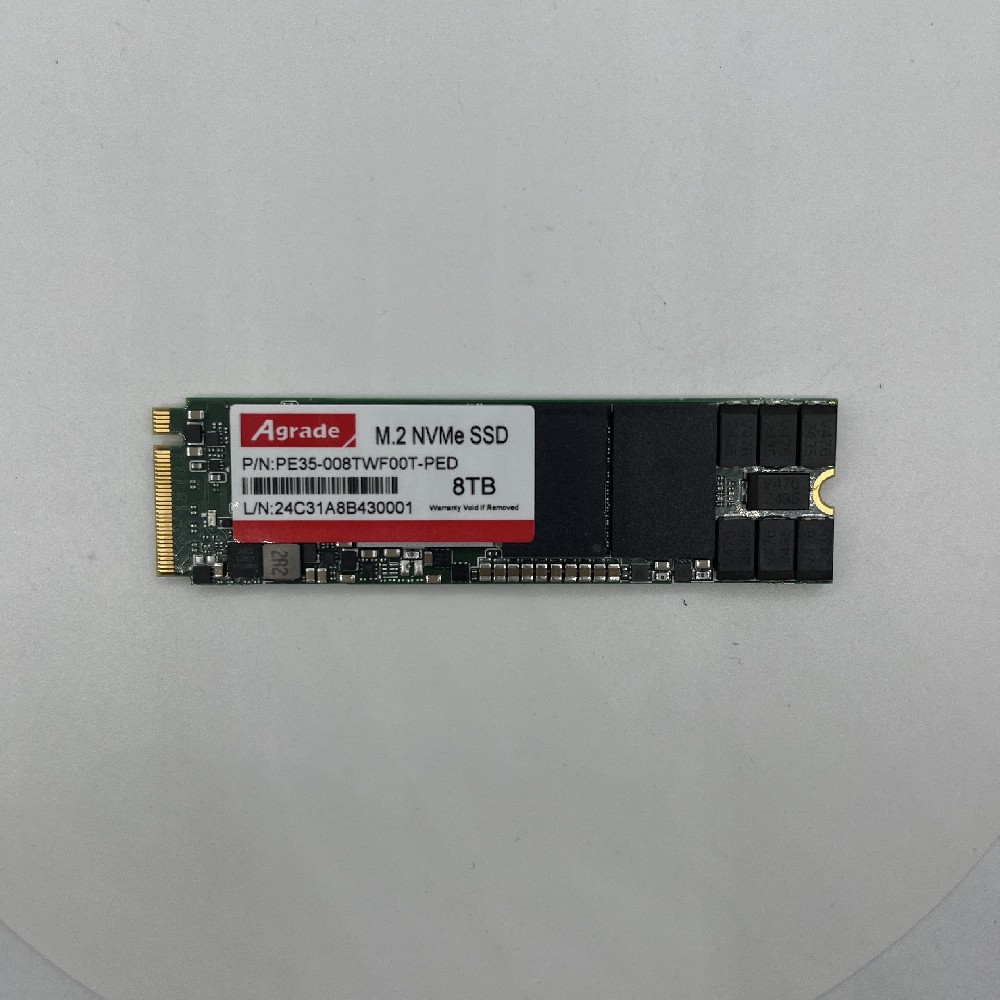
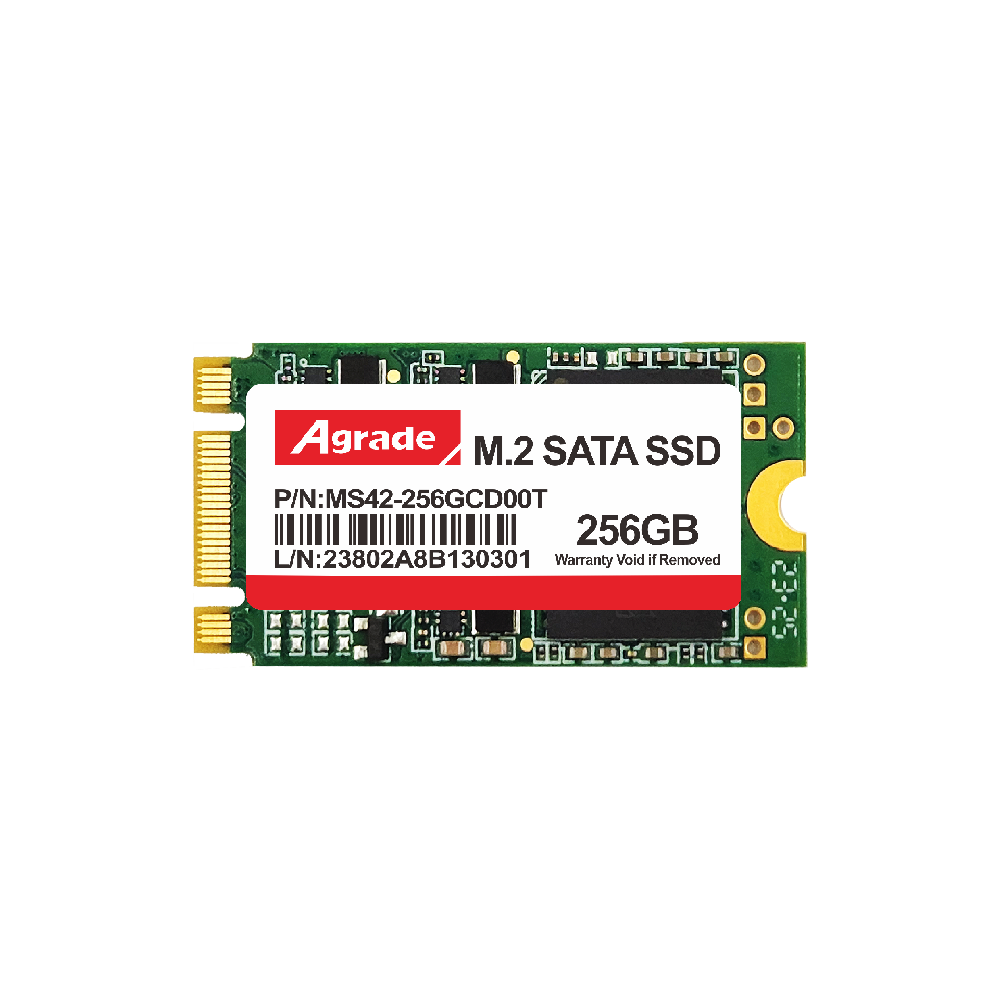
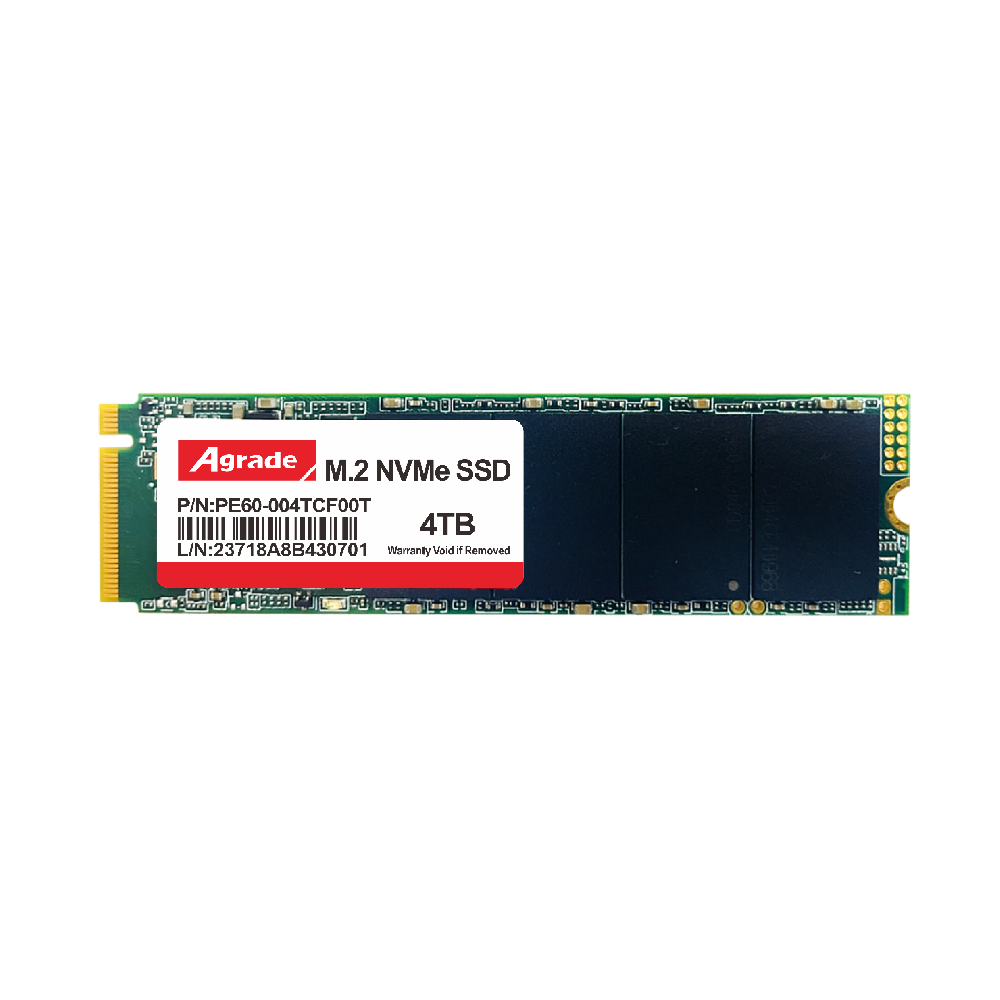
With vertical stacking, 3D NAND can pack more gigabytes into the same physical footprint. For industrial applications like edge servers, surveillance systems, and automation controllers, this means more data can be stored locally without sacrificing space. Agrade Storage utilizes high-layer-count 3D NAND to deliver industrial SSDs with capacities ranging from 60 GB to several terabytes.
Improved Endurance and Reliability
3D NAND cells are larger and more robust than their planar counterparts, because they are not compressed into the smallest possible node. This reduces electron leakage and cell wear, resulting in higher program/erase (P/E) cycles. For industrial SSDs, this translates to longer operational life. Agrade Storage validates each 3D NAND die to ensure it meets the rigorous endurance requirements of continuous 24/7 operation.
Lower Power Consumption
Vertical stacking reduces the need for high-voltage charge pumps, and the larger cell geometry allows for lower operating voltages. In battery-powered industrial equipment—such as portable diagnostic tools or remote IoT sensors—this power efficiency extends runtime and reduces heat generation.
Better Performance in Harsh Conditions
3D NAND is inherently more resistant to temperature fluctuations and physical stress. Industrial SSDs built with 3D NAND can operate reliably in wide temperature ranges (-40°C to +85°C) and withstand high levels of vibration and shock. Agrade Storage further enhances this by using industrial-grade controllers and conformal coating for additional protection.
Challenges of 3D NAND in Industrial Storage
Despite its advantages, 3D NAND is not without challenges, especially when deployed in mission-critical industrial settings.
Complex Manufacturing and Cost
Building 3D NAND requires advanced fabrication processes to align and etch dozens of layers with precision. This complexity can lead to higher initial costs compared to older planar NAND. However, as the technology matures, costs are decreasing. Agrade Storage works closely with leading NAND manufacturers to source high-quality 3D NAND at competitive prices while ensuring supply chain stability.
Latency and Write Amplification
3D NAND chips often use a three-bit-per-cell (TLC) or four-bit-per-cell (QLC) architecture to maximize density. This can introduce higher write latency and write amplification compared to single-level cell (SLC) NAND. In industrial applications where predictable low latency is critical—such as real-time control systems—this is a concern. Agrade Storage mitigates this by employing advanced error correction (ECC), wear-leveling algorithms, and SLC caching modes in its industrial SSDs.
Data Retention at High Temperatures
While 3D NAND performs well at elevated temperatures, data retention can degrade over time if the storage device operates near its maximum temperature threshold for extended periods. Industrial storage must balance performance with data integrity. Agrade Storage conducts rigorous thermal cycling tests and incorporates thermal throttling mechanisms to preserve data retention in extreme conditions.
End-of-Life Considerations
As 3D NAND layers increase, the number of compatible controllers and firmware versions shrinks. Industrial users who require long-term availability (often 5-10 years) may face obsolescence risks. Agrade Storage addresses this by offering lifecycle management and custom firmware support, ensuring that industrial SSDs remain supported even as NAND generations evolve.
Practical Applications of 3D NAND Industrial SSDs
3D NAND technology is already deployed across a wide range of industrial sectors. Here are a few key application areas where Agrade Storage industrial SSDs excel:
- Automation and Robotics: High-cycle write operations in PLCs and robotic controllers benefit from the endurance of 3D NAND. Agrade Storage SSDs with power-loss protection ensure data integrity during unexpected shutdowns.
- Transportation and Railways: In-vehicle infotainment, telematics, and train control systems require storage that can handle constant vibration and temperature swings. 3D NAND SSDs from Agrade Storage are tested to EN 50155 standards.
- Medical Imaging and Diagnostics: High-resolution imaging systems generate large files that must be read quickly and stored safely. 3D NAND provides the necessary capacity and speed without generating excessive heat inside sensitive medical equipment.
- Edge Computing and IoT Gateways: These devices often operate in remote or unstaffed locations. The low power consumption and high reliability of 3D NAND reduce maintenance visits and downtime.
- Surveillance and Security: Continuous video recording demands high write endurance. Agrade Storage industrial SSDs with 3D NAND can handle 24/7 surveillance workloads for years.
How Agrade Storage Optimizes 3D NAND for Industrial Use
Agrade Storage does not simply buy 3D NAND chips and assemble them into drives. The company engineers industrial SSDs from the ground up to overcome the challenges mentioned above. Key optimizations include:
- Custom firmware with adaptive wear-leveling and dynamic bad-block management.
- Industrial-grade controllers with hardware ECC (e.g., LDPC) to extend NAND life.
- Rigorous qualification processes including burn-in, thermal cycling, and shock/vibration testing.
- Support for wide temperature ranges and conformal coating for moisture and dust resistance.
- Long-term supply commitments to ensure product availability for industrial project lifecycles.
Conclusion
3D NAND technology represents a significant leap forward for industrial storage, offering higher capacities, improved endurance, and greater resilience than planar NAND. However, it also brings challenges such as cost, latency, and thermal management that must be addressed through careful engineering. Agrade Storage combines the best of 3D NAND with industrial-grade design and rigorous testing to deliver industrial SSDs that meet the demanding needs of automation, transportation, medical, and edge computing applications. As the industry moves toward higher layer counts and more sophisticated controllers, 3D NAND will continue to be the backbone of reliable, high-performance industrial storage. To learn more about how Agrade Storage can support your next industrial project, contact our team today.

-
Products
Advantages
-
Solutions
-
News
About us
-
Contact us
Tel:+86 19926658803
Whatsapp:+86 19926658803
lianle1210@163.com
Address: 30CF, Caihong Building, Caihong Road, Futian District, Shenzhen City, Guangdong Province, China


Friendly Links:
