













News


 电商部
电商部  2026-01-28 16:52:25
 Core Materials of Wide-temperature Memory Modules: How to Resist Extreme Temperatures
The ability of wide-temperature memory modules to withstand harsh temperature environments is fundamentally supported by innovative material systems. From substrate bearing to surface heat dissipation, three layers of protective materials work together to form a comprehensive temperature-resistant barrier, solving the temperature range limitation of ordinary memory. Each core material is customized for extreme conditions, balancing temperature resistance, thermal conductivity, and mechanical strength to achieve stable operation in extreme environments.
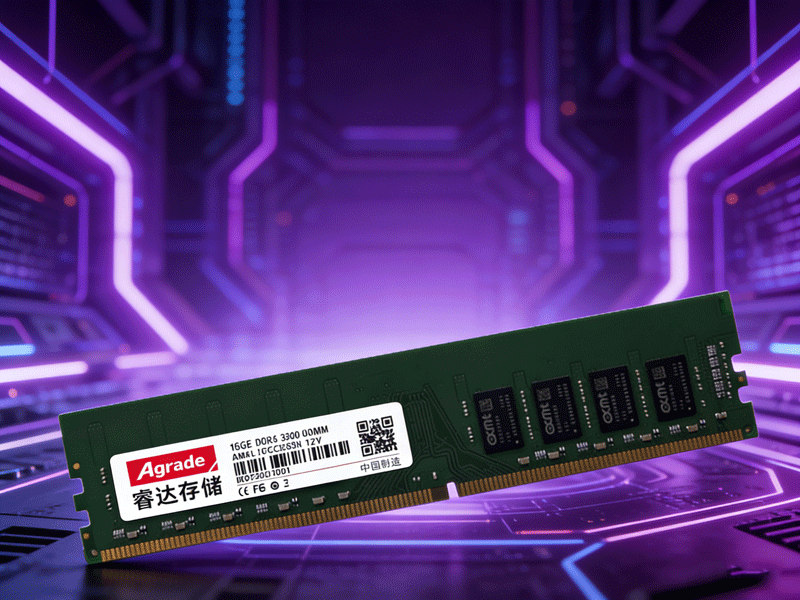
The substrate, as the core bearing component, is the first line of defense against extreme temperatures. Most industrial-grade wide-temperature memory modules adopt high-temperature co-fired ceramic (HTCC) substrates, which are sintered from high-purity alumina (92%-96%) at 1500-1600°C . This substrate has excellent high-temperature resistance and thermal shock resistance, and its thermal expansion coefficient is strictly matched with that of silicon chips to avoid substrate cracking due to thermal expansion and contraction differences. For high-power scenarios, more advanced silicon nitride ceramic substrates are used, with thermal conductivity three times higher than that of alumina substrates, which can withstand sudden temperature changes exceeding 1000°C without deformation .
The material upgrade in chip connection directly determines high-temperature stability. Consumer-grade memory uses lead-tin alloy solder with a melting point of only 183°C, which is prone to failure in high-temperature environments. In contrast, wide-temperature memory uses high-temperature lead-free solder composed of tin, silver, and copper, with a melting point raised to above 250°C . Military-grade products even adopt special solder with a melting point exceeding 300°C to ensure long-term stable connection at 125°C. The memory chips undergo rigorous aging screening, including hundreds of temperature cycle tests between -55°C and 125°C, to eliminate chips with parameter drift and ensure stable performance in the full temperature range .
Surface heat dissipation materials optimize temperature resistance. Graphene-copper foil composite modules, with a thickness of less than 1mm, improve heat dissipation efficiency by more than 30% compared with traditional aluminum heat sinks, and have the advantage of light weight . For DDR5 wide-temperature memory with high power consumption, modular liquid cooling solutions are available, which achieve precise heat conduction through micro coolant channels, reducing chip temperature to within the safe range of 85°C even under full load . Some products also apply high-temperature resistant insulating coatings on the surface, integrating heat dissipation, corrosion resistance, and electromagnetic interference protection to form a comprehensive protective system.

-
Products
Advantages
-
Solutions
-
News
About us
-
Contact us
Tel:+86 19926658803
Whatsapp:+86 19926658803
lianle1210@163.com
Address: 30CF, Caihong Building, Caihong Road, Futian District, Shenzhen City, Guangdong Province, China


Friendly Links:
