












News


 电商部
电商部  2026-01-28 16:55:21
 Thermal Management Technology for Wide-temperature Memory Modules: Active and Passive Cooling Synerg
The stable operation of wide-temperature memory modules in extreme temperature environments relies not only on temperature-resistant materials and reinforced processes but also on sophisticated thermal management design. The core goal of thermal management technology is to balance temperature, performance, and service life. Through the synergy of active monitoring and passive cooling, it avoids performance attenuation and hardware damage caused by high temperature, while preventing energy waste from excessive cooling. This collaborative design is a key technical highlight distinguishing wide-temperature memory from ordinary memory, and thermal management schemes are optimized for power consumption and space constraints in different scenarios.
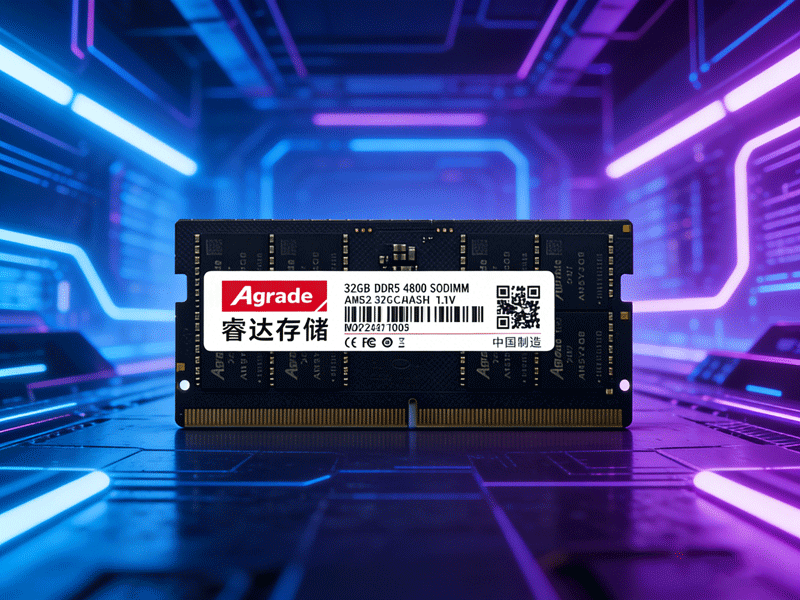
Passive cooling design is the foundation of thermal management, focusing on reducing heat accumulation and improving thermal conductivity, suitable for low-power and space-constrained scenarios. The PCBs of wide-temperature memory use FR-4 enhanced materials with high thermal conductivity, and some high-end products adopt ceramic PCBs . The copper layer thickness is increased to 2oz (about 70 microns), improving thermal conductivity by more than 50% compared with 1oz copper layers of ordinary memory, enabling rapid heat conduction from chips to the surface . Meanwhile, underfill technology fills gaps between chips and substrates, enhancing mechanical strength and thermal conductivity to avoid local heat accumulation. Surface cooling modules vary, including graphene copper foil, aluminum heat sinks, and ceramic heat sinks. Graphene copper foil modules with thickness less than 1mm improve heat dissipation efficiency by over 30% compared with traditional aluminum heat sinks, being lightweight and widely used in portable industrial equipment .
Active temperature monitoring systems form the "nerve center" of thermal management, realizing real-time temperature regulation for high-power and extreme temperature range scenarios. Modern wide-temperature memory generally integrates high-precision thermistors or thermocouple sensors with a sampling frequency of up to 100Hz, accurately capturing chip temperature changes and transmitting data to dedicated control chips for analysis . Through hardware-software integrated overheating prevention mechanisms, when temperature approaches the preset threshold (usually 85°C or 125°C, adjusted by product grade), it automatically reduces memory operating frequency and adjusts supply voltage, exchanging slight performance loss for stability . Some products also have low-temperature startup assistance functions, heating chips through preheating circuits to ensure smooth startup at temperatures below -40°C. In addition, high-end products adopt over-temperature protection circuits with hysteresis function, triggering power-off protection above 160°C and resuming operation only when temperature drops to 140°C, avoiding hardware wear from frequent switching at critical temperatures.
High-end wide-temperature memory also adopts dynamic adaptation strategies to achieve intelligent balance between temperature and performance. In high-temperature environments, it automatically reduces memory frequency from 3200MHz to 2666MHz and supply voltage from 1.2V to 1.0V, reducing power consumption by more than 30% while controlling chip temperature within the safe range . When temperature returns to the appropriate range (25°C-60°C), it quickly resumes full-speed operation without affecting overall system performance. For high-density servers and high-power industrial control modules, modular liquid cooling solutions become mainstream, achieving precise heat conduction through micro coolant channels in contact with memory chips, improving heat dissipation efficiency by 8-19% compared with passive cooling . The synergy of active and passive cooling enables wide-temperature memory to cope with extreme temperature challenges and adapt to performance and power consumption requirements of different scenarios.

-
Products
Advantages
-
Solutions
-
News
About us
-
Contact us
Tel:+86 19926658803
Whatsapp:+86 19926658803
lianle1210@163.com
Address: 30CF, Caihong Building, Caihong Road, Futian District, Shenzhen City, Guangdong Province, China


Friendly Links:
