












News


 电商部
电商部  2026-03-25 11:32:43
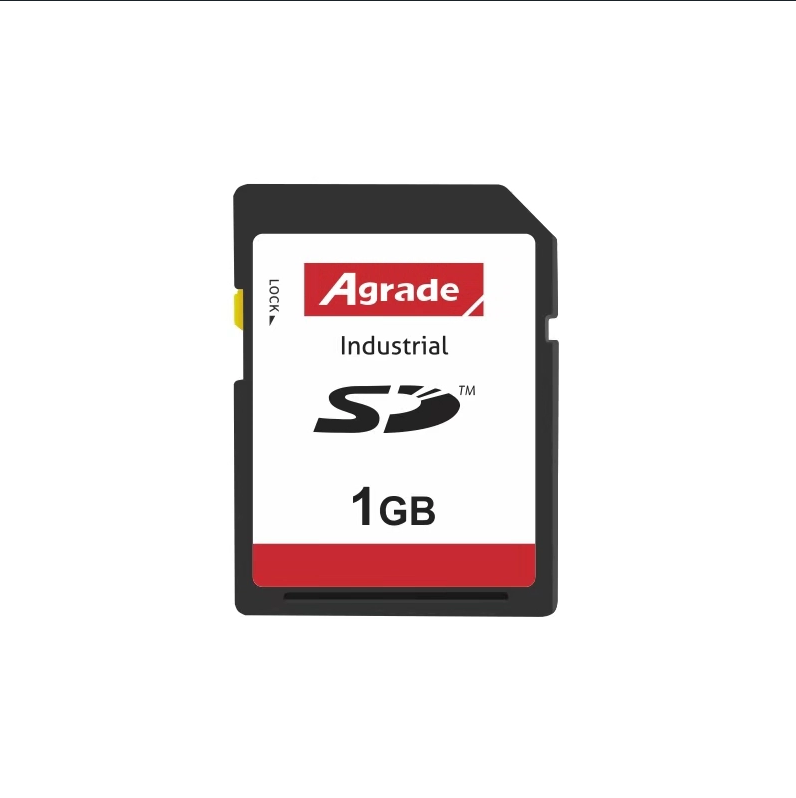
 Wide Temperature Industrial SD Card: Why -40°C to 85°C Matters
Temperature extremes are among the leading causes of storage failure in outdoor, automotive, and industrial environments. Wide-temperature industrial SD cards are purpose-built to perform reliably where consumer cards would cease to function.
1. Defining Wide Temperature Range
A true industrial SD card operates across -40°C to 85°C ambient temperature. This covers freezing Arctic conditions, scorching deserts, and the interior of sealed enclosures where heat builds up. Some specialized variants extend to -45°C or 90°C for extreme applications.
2. Thermal Management Mechanisms
On-Board Sensors: Industrial cards embed temperature sensors that monitor die temperature in real time. When approaching operational limits, the controller may throttle write speeds to prevent data corruption rather than shutting down abruptly.
Heat Spreading: Copper layers within the PCB act as heat spreaders, dissipating hotspots. Thermal interface materials (TIMs) conduct heat to the device enclosure when the card is installed in a system.
3. Rugged Construction Beyond Temperature
Wide-temperature capability is often paired with other rugged features:
Conformal Coating: A thin polymer layer protects the circuit board from moisture, salt spray, and conductive dust.
Vibration and Shock Resistance: Industrial cards pass tests such as ISO 16750-3 for automotive applications, surviving 5G vibrations and 50G shocks.
Gold Plating: Thick gold (30µ inches) on the contact fingers resists oxidation and ensures reliable connections over thousands of insertion cycles.
4. Real-World Applications
Wide-temperature industrial SD cards are essential in telematics (fleet management), solar power monitoring stations, outdoor surveillance, and military field equipment where environmental conditions are unpredictable.
When selecting a card, verify that the stated temperature range is operational, not just storage. A card that can be stored at -40°C but only operate at 0°C is insufficient for true industrial needs.

-
Products
Advantages
-
Solutions
-
News
About us
-
Contact us
Tel:+86 19926658803
Whatsapp:+86 19926658803
lianle1210@163.com
Address: 30CF, Caihong Building, Caihong Road, Futian District, Shenzhen City, Guangdong Province, China


Friendly Links:
