












News


 Agrade Storage Editorial Team
  2026-06-11 16:23:38
 Industrial CF Cards vs SD Cards: Choosing the Right Storage for Your Device
Introduction
When selecting memory cards for industrial devices, engineers and procurement specialists often face a critical decision: industrial CompactFlash (CF) cards or industrial SD cards. Both serve as reliable storage solutions, but their technical characteristics and performance profiles differ significantly. Choosing the wrong format can lead to data loss, system downtime, or premature hardware failure in harsh environments. This article provides a detailed comparison of industrial CF cards versus SD cards, covering technical specifications, practical applications, and reliability factors. We will also highlight how Agrade Storage, a leader in industrial storage, offers robust options for both formats to meet demanding operational requirements.
Understanding Industrial CF Cards
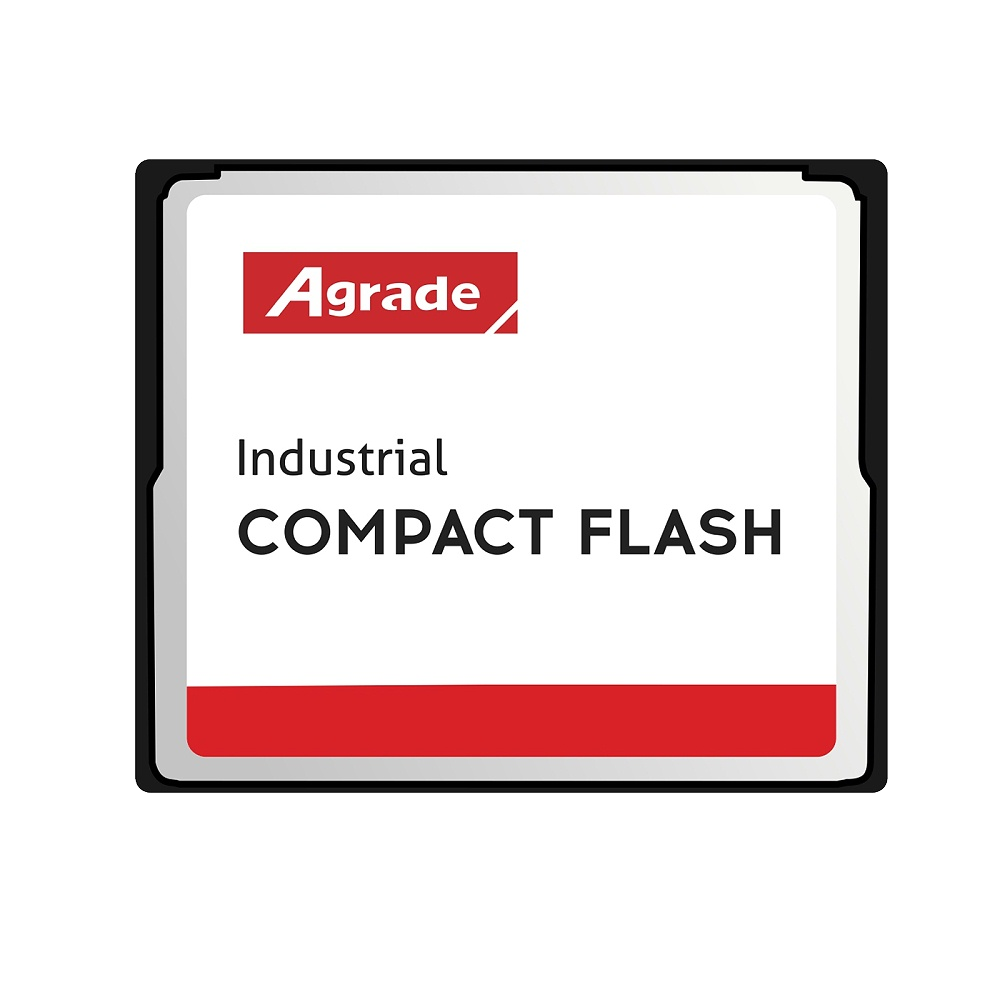
CompactFlash (CF) cards were originally developed for portable devices and professional photography, but their rugged design and high performance quickly made them a staple in industrial storage. Industrial CF cards are built to withstand extreme temperatures, shock, and vibration, making them ideal for embedded systems, medical equipment, and aerospace applications.
Technical Specifications of Industrial CF Cards
- Form Factor: 42.8 mm x 36.4 mm x 3.3 mm (Type I) or 5 mm (Type II).
- Interface: Parallel ATA (IDE) interface, providing direct memory access and low latency.
- Storage Capacity: Typically ranges from 128 MB to 128 GB in industrial grades.
- Speed: Sequential read/write speeds up to 120 MB/s for advanced models.
- Durability: Operating temperature range from -40°C to +85°C; resistant to 1000 G of shock and 20 G of vibration.
- Endurance: High program/erase cycles thanks to SLC (Single-Level Cell) NAND flash technology used in industrial variants.
Industrial CF cards from Agrade Storage incorporate advanced wear-leveling and error correction (ECC) algorithms to ensure data integrity over long service lives. These cards are often used in legacy industrial systems that still rely on the IDE interface.
Understanding Industrial SD Cards
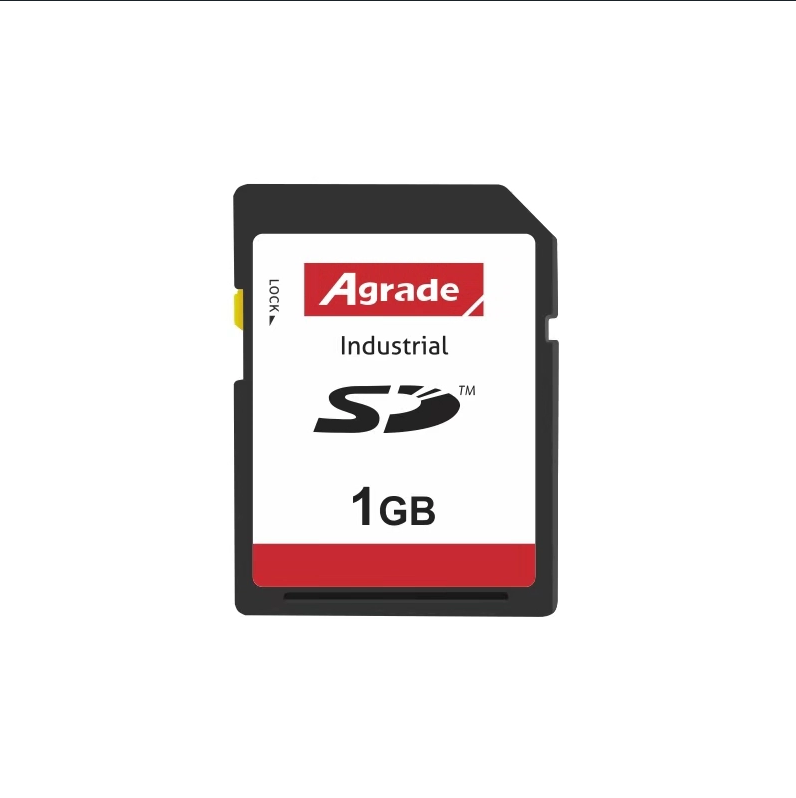
SD (Secure Digital) cards are the most ubiquitous memory card format in consumer electronics, but industrial-grade SD cards offer enhanced reliability for professional and embedded applications. They are smaller and lighter than CF cards, making them suitable for space-constrained devices.
Technical Specifications of Industrial SD Cards
- Form Factor: Standard SD (32 mm x 24 mm x 2.1 mm), miniSD, or microSD.
- Interface: SD bus interface (SPI or SD mode) with support for UHS-I or UHS-II speeds.
- Storage Capacity: Up to 2 TB in SDXC format, though industrial versions typically max out at 256 GB for reliability.
- Speed: Sequential read speeds up to 170 MB/s for UHS-II; write speeds vary by class (e.g., U3, V30).
- Durability: Industrial SD cards operate from -40°C to +85°C, with shock resistance up to 1500 G and vibration up to 20 G.
- Endurance: Often use pSLC (pseudo-SLC) or 3D TLC NAND with robust management firmware.
Industrial SD cards from Agrade Storage are designed for applications where size and low power consumption are critical, such as in IoT gateways, surveillance cameras, and portable diagnostic tools.
Key Differences: Industrial CF Cards vs SD Cards
Interface and Compatibility
Industrial CF cards use the parallel ATA interface, which is native to many older embedded systems and programmable logic controllers (PLCs). In contrast, SD cards use a serial interface that is more common in modern consumer and industrial electronics. If your device has an IDE controller, a CF card is likely the correct choice. For devices with SD slots, an industrial SD card is the straightforward option. Agrade Storage provides both formats to ensure compatibility with a wide range of industrial hardware.
Performance and Speed
For applications requiring low latency and consistent data transfer, industrial CF cards often outperform SD cards due to their parallel architecture. However, newer UHS-II SD cards can match or exceed CF card speeds in sequential operations. For random read/write performance—critical in database and logging applications—CF cards generally have an edge because of their optimized controller design. Agrade Storage’s industrial CF cards are engineered to deliver sustained write speeds without throttling, even under continuous load.
Durability and Environmental Tolerance
Both industrial CF and SD cards are built to survive extreme conditions, but there are nuances. CF cards have a stiffer, thicker casing that provides better physical protection against bending and insertion force. SD cards, being thinner, are more susceptible to physical damage if mishandled, but their industrial variants include conformal coating to resist moisture and dust. Agrade Storage tests all industrial memory cards to MIL-STD-810G standards for shock and vibration.
Storage Capacity and Scalability
Industrial SD cards support higher maximum capacities (up to 2 TB) compared to most industrial CF cards (typically up to 128 GB). If your application requires large storage for high-resolution video logging or extensive data acquisition, an SD card may be the better fit. For mission-critical systems where capacity needs are modest but reliability is paramount, CF cards remain a trusted choice.
Practical Applications
When to Choose Industrial CF Cards
- Legacy Industrial Systems: Many factory automation systems and medical devices still use IDE-based controllers. Replacing the entire system is costly; industrial CF cards serve as drop-in upgrades.
- High-Reliability Boot Drives: CF cards are often used as boot drives in embedded PCs and single-board computers because of their predictable performance and low failure rates.
- Military and Aerospace: The robust form factor and wide temperature tolerance make CF cards suitable for avionics, drones, and ground control stations.
When to Choose Industrial SD Cards
- Space-Constrained Devices: In handheld terminals, portable medical devices, or compact IoT sensors, the small footprint of SD cards is a major advantage.
- High-Capacity Storage: For video surveillance systems or data loggers that generate terabytes of data, industrial SD cards provide the necessary capacity.
- Hot-Swappable Applications: SD cards are easier to insert and remove without tools, making them ideal for field service where data must be retrieved quickly.
Agrade Storage: Your Partner in Industrial Storage Solutions
Agrade Storage specializes in industrial-grade memory and storage products, including industrial CF cards, industrial SD cards, and industrial SSDs. Our products undergo rigorous validation to ensure they meet the demands of harsh environments. Whether you need a high-endurance CF card for a CNC machine or a wide-temperature SD card for a remote weather station, Agrade Storage delivers consistent quality and long-term availability. We also offer custom firmware and labeling services to match your specific device requirements.
Conclusion
The choice between industrial CF cards and SD cards ultimately depends on your device’s interface, performance needs, and environmental conditions. CF cards excel in legacy systems and high-reliability boot applications, while SD cards offer higher capacity and smaller size for modern, space-sensitive designs. Both formats, when sourced from a trusted industrial storage provider like Agrade Storage, deliver the durability and data integrity required for mission-critical operations. Evaluate your device’s specifications, consider the operating environment, and consult with storage experts to make an informed decision. With the right industrial memory card, you can ensure your system operates reliably for years to come.

-
Products
Advantages
-
Solutions
-
News
About us
-
Contact us
Tel:+86 19926658803
Whatsapp:+86 19926658803
lianle1210@163.com
Address: 30CF, Caihong Building, Caihong Road, Futian District, Shenzhen City, Guangdong Province, China


Friendly Links:
