












News


 Agrade Storage Editorial Team
  2026-05-31 16:10:16
 Total Cost of Ownership: Why Industrial Storage Beats Consumer Drives
Introduction
When selecting storage for a business-critical application, the upfront price tag often dominates the decision. However, the real financial impact of a storage device extends far beyond its initial purchase cost. This is where the concept of Total Cost of Ownership (TCO) becomes essential. For industrial applications—such as factory automation, medical devices, or surveillance systems—choosing between consumer-grade storage and industrial storage can mean the difference between years of reliable operation and costly, repeated failures. In this article, we will break down the TCO of industrial versus consumer storage, explaining why an industrial SSD from a trusted provider like Agrade Storage delivers superior long-term value.
Understanding Total Cost of Ownership in Storage
TCO accounts for all costs associated with a storage device over its entire lifecycle. These include the purchase price, installation costs, energy consumption, maintenance, downtime losses, data recovery expenses, and replacement frequency. For industrial environments, where systems must operate 24/7 under harsh conditions, the hidden costs of consumer drives can quickly outweigh any initial savings.
Key Components of TCO
- Acquisition Cost: The sticker price of the drive.
- Operational Costs: Power usage and thermal management.
- Maintenance and Replacement: Labor, shipping, and part costs for swapping failed drives.
- Downtime Costs: Lost production, data loss, and system recovery time.
- End-of-Life Costs: Data sanitization and disposal.
Consumer Storage: Low Initial Price, High Long-Term Risk
Consumer SSDs and HDDs are designed for typical home or office use—light workloads, moderate temperatures, and limited write cycles. They use commercial-grade NAND flash and controllers optimized for cost over endurance. While a consumer 1TB SSD might cost significantly less than its industrial counterpart, its TCO in a demanding environment is often higher due to frequent failures and unscheduled downtime.
Technical Limitations of Consumer Drives
Consumer drives lack robust error correction, wide-temperature tolerance, and power-loss protection. In a factory setting, a sudden power outage can corrupt data on a consumer SSD. Furthermore, their limited Program/Erase (P/E) cycles mean they wear out quickly under continuous write operations. A typical consumer SSD may have a lifespan of only 1-2 years in a surveillance DVR recording 24/7. After the warranty period, the user is left with a dead drive and potential data loss.
Practical Example
A manufacturing plant installed consumer SSDs in its edge servers to log production data. Within 18 months, 30% of the drives failed, causing data gaps and requiring emergency replacement. The cumulative cost of replacements, labor, and lost production exceeded the cost of using industrial SSDs by a factor of three.
Industrial Storage: Higher Upfront Cost, Lower Lifetime Expense
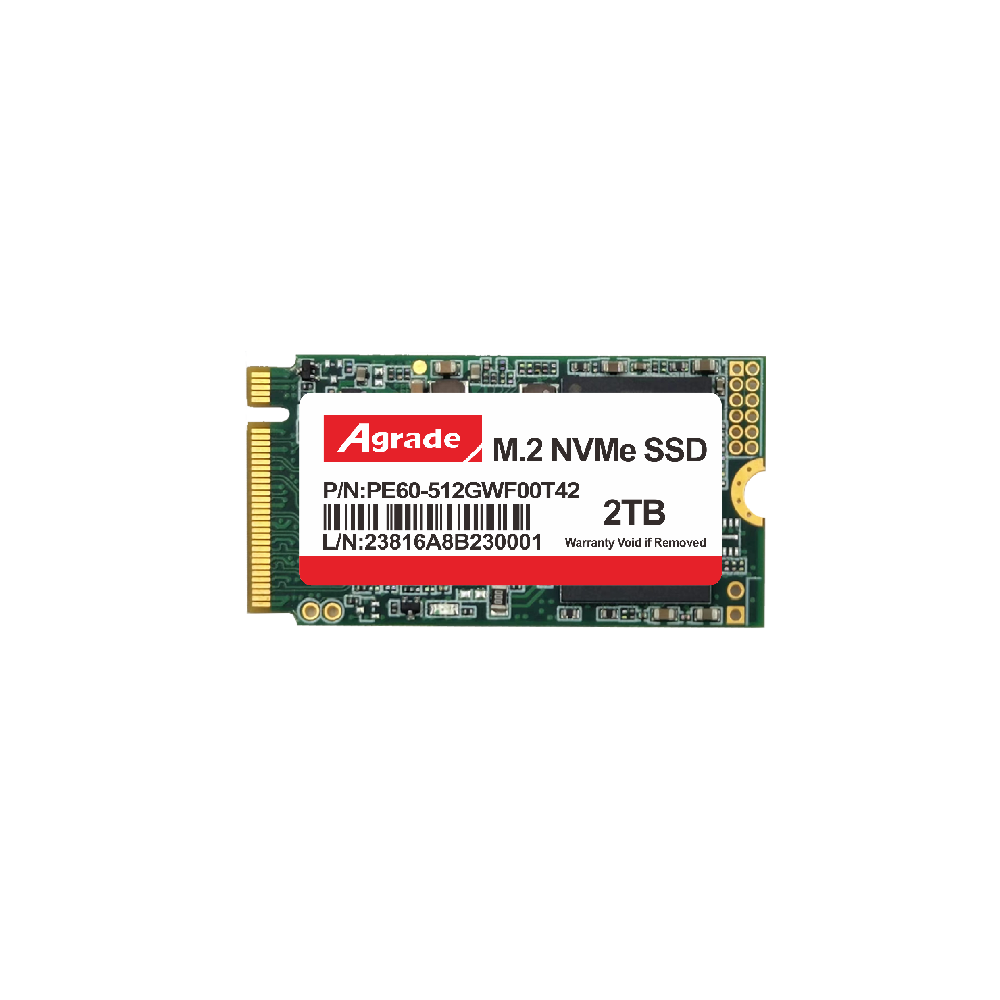
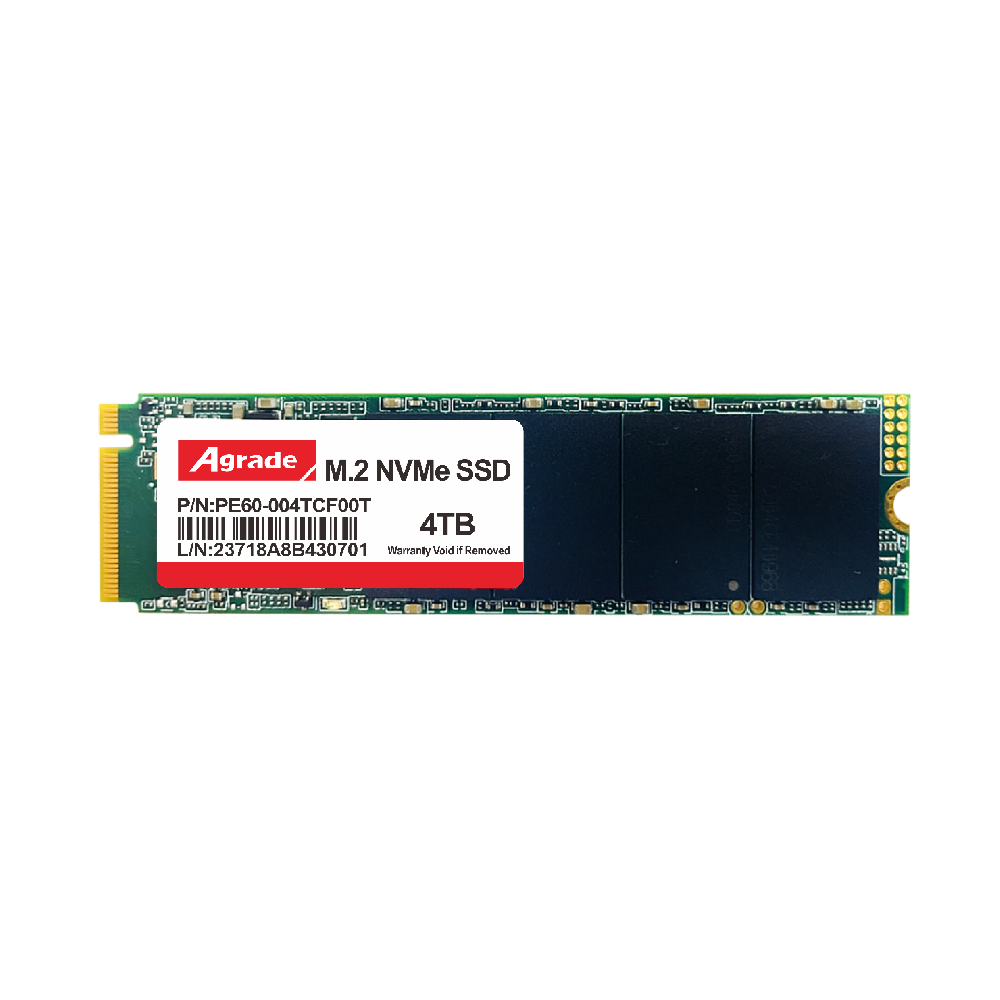
Industrial storage solutions, such as those from Agrade Storage, are engineered for mission-critical environments. They use industrial-grade components, advanced wear-leveling algorithms, and rigorous testing to ensure reliability under extreme conditions. While the initial purchase price is higher, the TCO is dramatically lower over a 5-10 year period.
Technical Advantages of Industrial SSDs
- Endurance: Industrial SSDs support 10x to 100x more write cycles than consumer drives. For example, an Agrade Storage industrial SSD rated for 3,000 P/E cycles will outlast a consumer drive rated for 300 P/E cycles in the same workload.
- Temperature Range: Industrial drives operate from -40C to 85C, while consumer drives typically fail below 0C or above 70C.
- Power-Loss Protection: Built-in capacitors ensure data integrity during sudden power loss, preventing corruption.
- Error Correction: Advanced LDPC (Low-Density Parity-Check) ECC reduces uncorrectable bit error rates to near zero.
Practical Application: Industrial Automation
Consider a robotic assembly line that logs performance data 24/7. An industrial SSD from Agrade Storage, with a 5-year warranty and 10-year lifespan, requires zero replacements during the equipment's service life. The consumer alternative would need to be swapped every 1-2 years, each time costing labor and causing 30-60 minutes of downtime. Over a decade, the industrial drive's TCO is 40-60% lower.
Comparing TCO: A Quantitative Analysis
Let's put numbers to the comparison. Assume a 256GB SSD used in a 24/7 write-intensive application:
- Consumer SSD (256GB): $40 purchase, 1.5-year lifespan, $60 labor per replacement, 2 hours downtime per failure at $500/hour lost production. Over 5 years: 3 replacements, total TCO = $40 + (3 x $60) + (3 x $1,000) = $3,220.
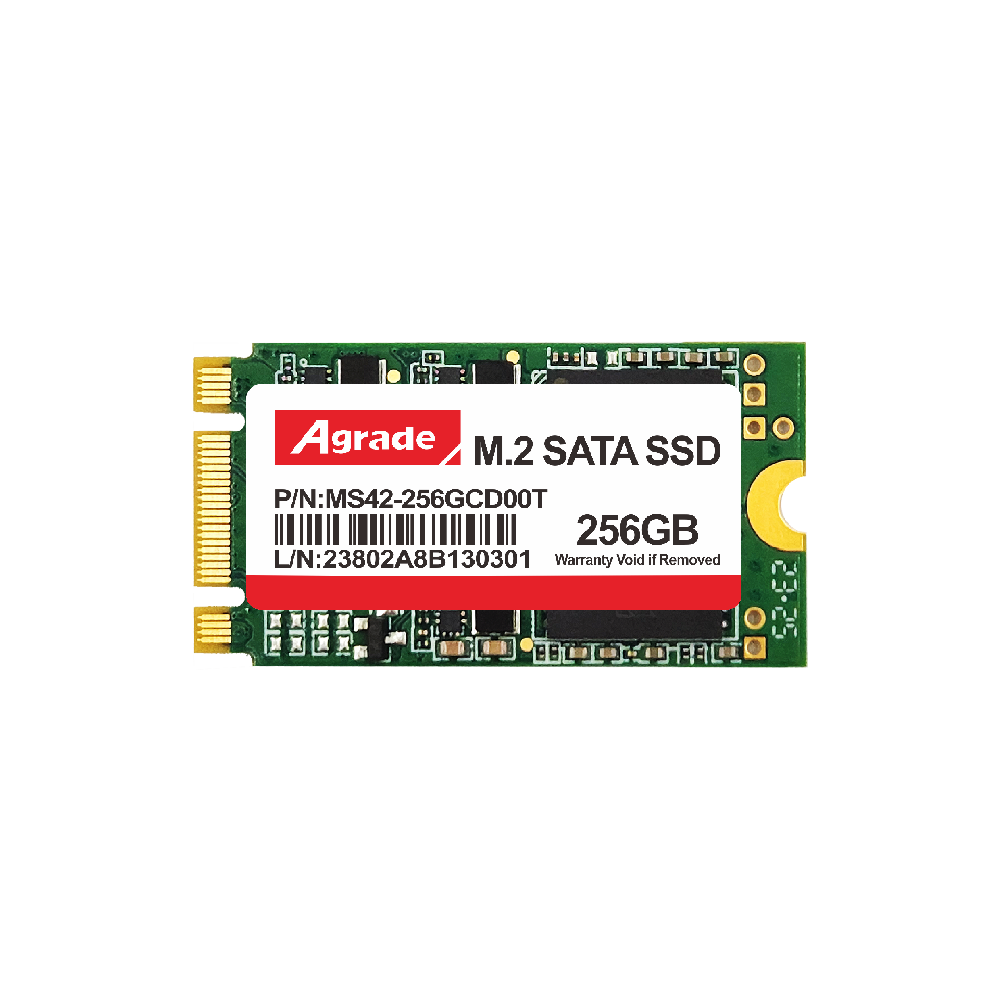
- Industrial SSD (256GB): $120 purchase, 5-year lifespan, no replacements needed. Total TCO = $120 + $0 + $0 = $120.
The industrial drive is over 26x more cost-effective in this scenario. Even with less intensive use, the gap remains significant.
When to Choose Industrial Storage
Industrial storage is essential for any application where reliability, endurance, and uptime are critical. Typical use cases include:
- Factory automation and PLCs
- Medical imaging and patient monitoring
- Transportation and railway systems
- Surveillance and security DVRs
- Energy and utility monitoring
Consumer storage may suffice for low-write, office-grade tasks like document storage or web browsing, but it is a false economy for industrial environments.
Why Agrade Storage Leads in Industrial Storage
Agrade Storage specializes in designing and manufacturing industrial SSDs that optimize TCO for demanding applications. Our drives feature global wear-leveling, power-loss protection, and wide-temperature support. We provide detailed endurance ratings and long-term availability, ensuring that your system can be supported for years without requalification. By choosing Agrade Storage industrial storage, you invest in reliability that pays for itself over time.
Conclusion
When evaluating storage options, looking beyond the initial price tag is crucial for accurate budgeting. The Total Cost of Ownership analysis clearly shows that industrial storage, while more expensive upfront, drastically reduces long-term expenses through higher endurance, fewer replacements, and minimized downtime. For any business where data integrity and continuous operation are non-negotiable, industrial SSDs from Agrade Storage are the clear choice. Contact us today to learn how our industrial storage solutions can lower your TCO and improve your operational efficiency.

-
Products
Advantages
-
Solutions
-
News
About us
-
Contact us
Tel:+86 19926658803
Whatsapp:+86 19926658803
lianle1210@163.com
Address: 30CF, Caihong Building, Caihong Road, Futian District, Shenzhen City, Guangdong Province, China


Friendly Links:
