












News


 电商部
电商部  2025-12-30 10:54:35
 IDE vs. SATA Disk On Module: Key Differences and How to Choose
When selecting a Disk On Module (DOM) for your application, one of the most critical decisions is choosing the right interface. The two most common options are IDE (Integrated Drive Electronics) and SATA (Serial ATA) DOMs, each with distinct characteristics, compatibility requirements, and performance capabilities. Understanding the differences between these two interfaces is essential to ensure optimal integration with your system and meet your application’s specific needs.
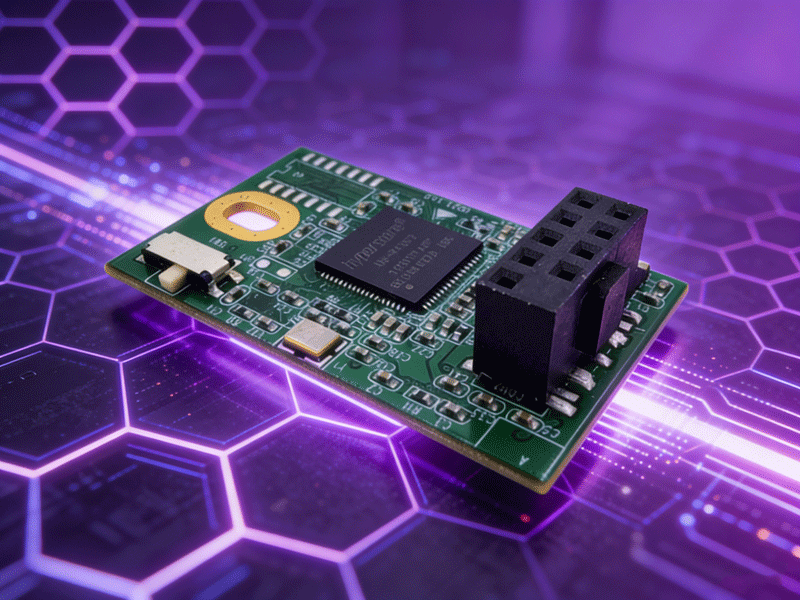
IDE DOMs, also known as PATA DOMs, are based on the older parallel ATA interface standard, which was widely used for HDDs in early computers. They are available in two main configurations: 40-pin and 44-pin. The 40-pin IDE DOM is designed for systems that originally supported 3.5-inch IDE HDDs and requires a separate 4-pin power connector, as the 40-pin interface only carries data signals. On the other hand, the 44-pin IDE DOM integrates both data and power into a single connector, making it suitable for 2.5-inch IDE systems and eliminating the need for an additional power cable.
SATA DOMs, by contrast, use the modern serial ATA interface, which offers several advantages over IDE. SATA interfaces support higher data transfer rates, with SATA 3.2 (6 Gb/s) DOMs delivering significantly faster read/write speeds compared to IDE models—up to 300MB/s read and 110MB/s write for SATA DOMs, versus a maximum of 25MB/s for IDE DOMs. SATA DOMs also feature a smaller, more compact connector, reducing cable clutter and improving airflow within the system. Additionally, many SATA DOMs support advanced features like hot-swapping (depending on the system) and power management, which are beneficial for energy-efficient applications.
The choice between IDE and SATA DOMs largely depends on your system’s compatibility and performance requirements. If you’re upgrading or maintaining older industrial equipment with an IDE interface, an IDE DOM is the only viable option. For new systems or applications that demand higher speed and better scalability, SATA DOMs are the preferred choice. It’s also important to consider the form factor—both IDE and SATA DOMs are available in vertical and horizontal orientations to accommodate different mechanical designs. By aligning the interface type with your system’s capabilities and your application’s performance needs, you can select a DOM that delivers reliable, long-term performance.

-
Products
Advantages
-
Solutions
-
News
About us
-
Contact us
Tel:+86 19926658803
Whatsapp:+86 19926658803
lianle1210@163.com
Address: 30CF, Caihong Building, Caihong Road, Futian District, Shenzhen City, Guangdong Province, China


Friendly Links:
