












News


 Agrade Storage Editorial Team
  2026-06-08 16:15:56
 How QLC NAND Is Transforming Industrial Storage Solutions
Introduction: A New Era for Industrial Storage
The industrial storage landscape is undergoing a quiet revolution. For decades, the primary trade-off in flash memory has been between cost, endurance, and density. SLC (Single-Level Cell) NAND offered unparalleled endurance but at a high price per gigabyte. MLC and TLC NAND provided a middle ground, balancing performance with affordability. Now, QLC (Quad-Level Cell) NAND is entering the industrial arena, and it is changing the rules of the game. With four bits per cell, QLC NAND delivers the highest density and lowest cost per gigabyte of any NAND technology in mass production. But can it withstand the harsh conditions and rigorous demands of industrial environments? In this article, we explore how QLC NAND is reshaping industrial storage, the technical innovations that make it viable, and why Agrade Storage is at the forefront of deploying these drives in mission-critical applications.
What Is QLC NAND and How Does It Work?
QLC NAND stores four bits of data per memory cell, compared to one bit for SLC, two for MLC, and three for TLC. This is achieved by using sixteen distinct voltage levels to represent the 16 possible combinations of four bits (0000 to 1111). The benefit is clear: QLC NAND can pack significantly more storage into the same physical footprint, making it ideal for applications that require high capacity without a proportional increase in cost.
Key Characteristics of QLC NAND
- Density: Up to 33% more density than TLC, enabling larger storage capacities in the same form factor.
- Cost per GB: The lowest among all NAND types, making it attractive for cost-sensitive industrial projects.
- Endurance: Typically lower program/erase (P/E) cycles—often around 1,000 cycles—compared to TLC (3,000 cycles) or MLC (10,000+ cycles).
- Performance: Write speeds are generally slower due to the need for precise voltage programming, but read speeds remain competitive.
These characteristics mean that QLC is not a drop-in replacement for every industrial use case. However, with proper controller design and system-level optimizations, QLC NAND can be highly effective in applications that prioritize read-intensive workloads and capacity over extreme write endurance.
Overcoming the Endurance Challenge: How QLC NAND Can Work in Industrial Settings
Industrial environments are unforgiving. Temperature extremes, vibration, power fluctuations, and continuous operation all test the limits of storage devices. The lower endurance of QLC NAND—typically around 1,000 P/E cycles—might seem like a disqualifying factor. However, several technological advancements are bridging the gap.
Advanced Controller Algorithms and Error Correction
Modern industrial SSDs employ sophisticated controllers that manage wear levelling, garbage collection, and error correction code (ECC) more efficiently than ever before. Low-Density Parity-Check (LDPC) codes, for instance, can correct multiple bit errors per page, extending the usable life of QLC NAND. Agrade Storage integrates such controllers in its industrial SSDs to ensure that even with QLC NAND, the drive meets the endurance requirements of many embedded systems.
Over-Provisioning and SLC Caching
By reserving a portion of the NAND capacity as over-provisioning (OP), the controller can balance writes across a larger pool of cells, reducing wear. Additionally, QLC drives often use a portion of the flash in SLC mode as a write cache. This accelerates write performance and reduces the number of direct QLC writes, thereby extending the lifespan of the drive. For an industrial storage solution from Agrade Storage, these features are tuned to match the specific workload patterns of factory automation, surveillance, or digital signage.
Smart Firmware and Thermal Management
Firmware that intelligently schedules background tasks, such as garbage collection, during idle periods can prevent performance degradation and reduce the thermal stress on the NAND cells. Industrial SSDs also include thermal throttling mechanisms to protect the drive when ambient temperatures rise above safe thresholds. This is critical for QLC NAND, which is more sensitive to temperature variations than SLC or MLC.
Practical Applications of QLC NAND in Industrial Storage
QLC NAND is not for every job, but it excels in specific industrial scenarios where capacity and cost are paramount. Below are some of the most promising applications.
Video Surveillance and Security Systems
Industrial surveillance systems generate enormous amounts of video data that must be stored for days or weeks. These workloads are almost entirely write-once, read-rarely, making them ideal for QLC NAND. The high capacity allows for longer retention times, while the lower cost per gigabyte reduces the total system cost. Agrade Storage offers industrial SSDs with QLC NAND specifically designed for continuous recording in security environments.
Digital Signage and Kiosks
Digital signage and interactive kiosks require storage for operating systems, media files, and application data. These are predominantly read-intensive workloads. A QLC-based SSD can store large media libraries without the high cost of TLC or MLC drives. The endurance of QLC is more than sufficient for the typical lifespan of such devices, which may only write a few gigabytes per day.
Embedded Systems and IoT Gateways
IoT gateways and embedded controllers often run Linux-based operating systems and collect data from sensors. While the operating system and software are written once, the data logs can accumulate over time. QLC NAND provides the capacity needed to store logs locally before they are transmitted to the cloud. When paired with robust power-loss protection and wear-leveling, an industrial SSD from Agrade Storage can handle these tasks reliably.
Cold Storage and Archival Systems
For data that is written once and accessed infrequently—such as regulatory records, machine logs, or historical production data—QLC NAND is an excellent choice. Its low cost makes it viable for large-scale archival storage, and the read performance remains adequate for retrieving records on demand. In these scenarios, the endurance limitations are rarely a concern.
How Agrade Storage Is Leading the Transition to QLC in Industrial SSDs
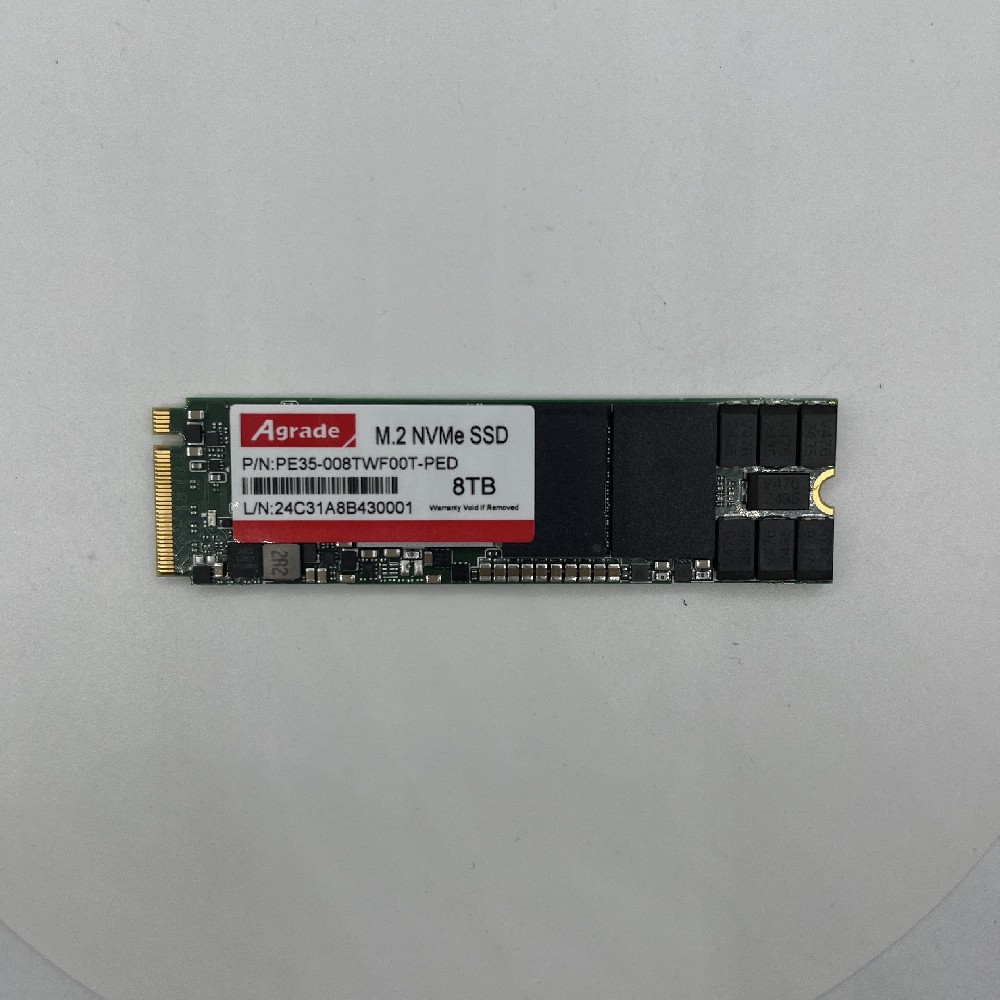
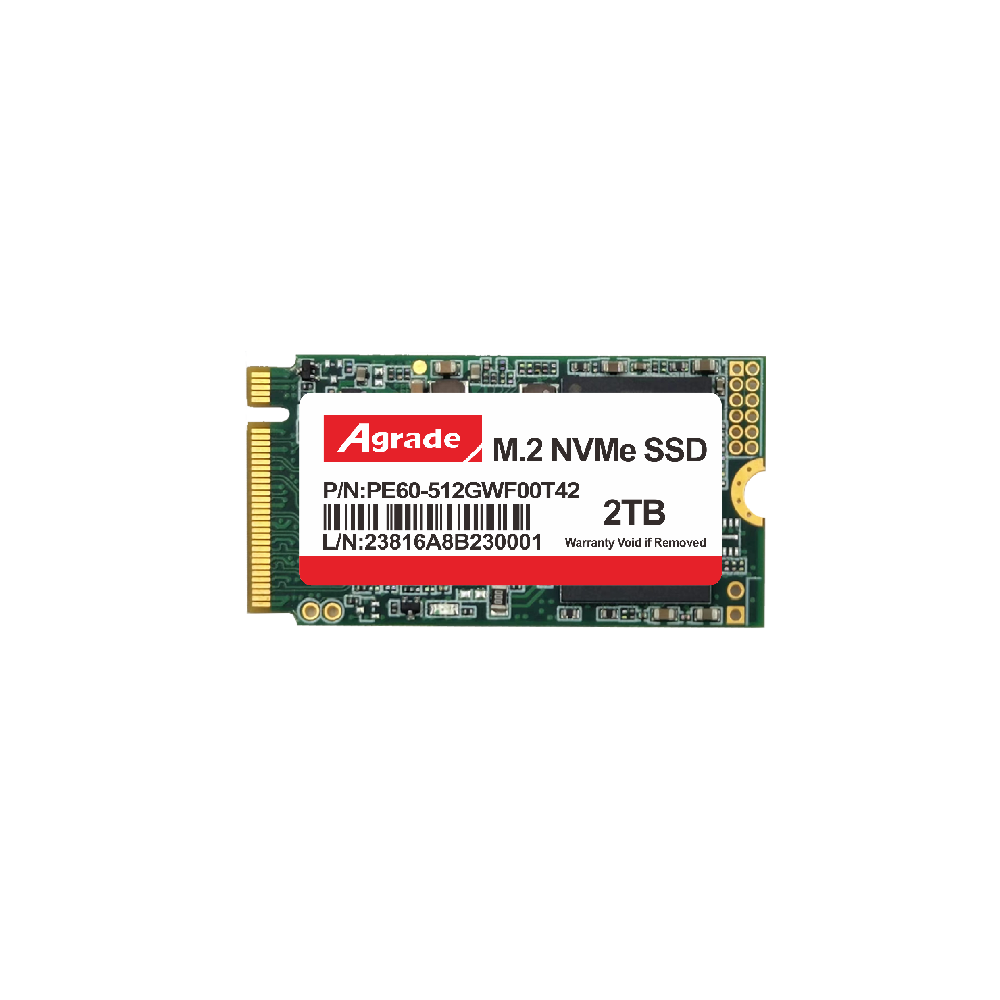
Agrade Storage has been a trusted name in industrial storage for years, offering a range of SSDs, DRAM modules, and embedded storage solutions. The company recognizes that one size does not fit all in the industrial sector. For applications that demand extreme endurance, such as write-intensive logging in harsh environments, Agrade still recommends MLC or SLC solutions. However, for the growing number of read-intensive, capacity-driven applications, Agrade Storage has developed industrial SSDs that leverage QLC NAND without compromising reliability.
These drives feature industrial-grade components, wide-temperature support (from -40C to +85C), and rigorous testing protocols. By combining QLC NAND with advanced controllers and custom firmware, Agrade Storage delivers products that meet the specific needs of industrial customers. The company also provides application-specific tuning, ensuring that the drive's garbage collection, caching, and wear-levelling algorithms are optimized for the target workload.
Conclusion: The Future of Industrial Storage Is Diverse
QLC NAND is not a universal replacement for existing flash technologies, but it is a powerful addition to the industrial storage toolkit. Its high density and low cost open up new possibilities for applications that were previously constrained by storage budgets. With proper engineering and controller design, QLC can deliver the reliability that industrial users demand. As the technology matures, we can expect to see QLC NAND become a standard option in industrial SSDs, alongside TLC, MLC, and SLC. Agrade Storage is committed to providing this diversity, helping customers choose the right storage for their specific industrial applications. Whether you need maximum endurance or maximum capacity at the right price, the evolving NAND landscape ensures that there is a solution for you.

-
Products
Advantages
-
Solutions
-
News
About us
-
Contact us
Tel:+86 19926658803
Whatsapp:+86 19926658803
lianle1210@163.com
Address: 30CF, Caihong Building, Caihong Road, Futian District, Shenzhen City, Guangdong Province, China


Friendly Links:
