












News


 Agrade Storage Editorial Team
  2026-06-08 16:11:17
 Thermal Management for Industrial SSDs: Design Best Practices
Introduction
In the world of industrial storage, reliability is non-negotiable. Unlike consumer-grade drives that operate in climate-controlled offices, industrial SSDs frequently face extreme temperatures, vibration, and continuous duty cycles. One of the most critical yet often overlooked factors in industrial SSD longevity is thermal management. Excessive heat accelerates NAND flash wear, triggers throttling, and can cause data corruption or complete drive failure. This article explores the physics behind SSD heat generation and provides actionable design best practices to keep your industrial storage running at peak performance. At Agrade Storage, we design our industrial SSDs with thermal resilience as a core principle, ensuring dependable operation from factory floors to remote IoT gateways.
Why Thermal Management Matters for Industrial SSDs
Industrial SSDs are built for endurance, but heat is their silent enemy. When NAND flash cells exceed their rated temperature range—typically 0 to 70 degrees Celsius for commercial and -40 to 85 degrees Celsius for industrial grades—the charge stored in each cell begins to leak. This leakage increases the bit error rate and forces the controller to apply more error correction, which consumes additional power and generates more heat. The result is a vicious cycle: heat causes errors, errors require more processing, and processing creates more heat.
Beyond data integrity, thermal stress directly impacts the lifespan of an industrial SSD. The Arrhenius equation tells us that for every 10 degrees Celsius rise in temperature, the rate of chemical reactions (including oxide degradation in NAND) doubles. In practical terms, a drive running at 85 degrees Celsius may have only half the lifespan of the same drive at 75 degrees Celsius. This is why proper thermal management is not optional—it is a prerequisite for any industrial storage deployment that demands five to ten years of service.
Key Heat Sources in Industrial SSDs
To manage heat, you first need to understand where it comes from. The primary heat sources in an industrial SSD include:
- NAND Flash Controller: The controller is the brain of the SSD. It manages wear leveling, garbage collection, and error correction. During heavy write operations, the controller can draw 2 to 5 watts of power, almost all of which converts to heat.
- NAND Flash Packages: Each NAND die generates heat during program and erase cycles. In multi-die packages, heat can accumulate quickly, especially in MLC or TLC NAND which requires higher voltages for programming than SLC.
- DRAM Cache: Some industrial SSDs include a DRAM buffer to store mapping tables. DRAM is sensitive to temperature and can become a hot spot if not properly ventilated.
- Power Management IC (PMIC): The PMIC regulates voltage to the NAND and controller. Inefficiencies in voltage conversion produce waste heat, particularly during power-loss protection events.
Design Best Practices for Thermal Management
1. Optimize PCB Layout and Airflow
The printed circuit board (PCB) layout plays a major role in heat dissipation. When designing a system that uses an industrial SSD, ensure that the drive is placed away from other high-heat components such as CPUs, voltage regulators, and power amplifiers. If the SSD must be located near a heat source, use a thermal baffle or a dedicated airflow channel to direct cool air over the drive. For embedded applications, consider using an SSD with a thermal pad interface that couples the controller and NAND packages to the system chassis. Agrade Storage offers industrial SSDs with optimized PCB copper thickness and thermal vias that pull heat away from critical components.
2. Use Appropriate Thermal Interface Materials (TIMs)
Thermal interface materials bridge the gap between the SSD components and a heatsink or enclosure. The most common TIMs for industrial storage are thermal pads (2 to 5 W/mK) and phase-change materials. When selecting a TIM, consider the compression ratio: too much compression can crack ceramic components, while too little leaves air gaps that insulate rather than conduct. For high-vibration environments, a non-silicone thermal pad is recommended because silicone oils can outgas and contaminate nearby optics or sensors.
3. Implement Dynamic Thermal Throttling (with Care)
Most industrial SSDs include a thermal throttling feature that reduces the controller clock speed or pauses write operations when the internal temperature exceeds a threshold. While throttling prevents immediate damage, it can cause unpredictable latency that disrupts real-time operations. The best practice is to set the throttling threshold at least 10 degrees Celsius below the NAND's maximum rated temperature. For example, if the NAND is rated to 85 degrees Celsius, configure throttling to begin at 75 degrees Celsius. This gives the system time to recover without forcing a hard shutdown. Agrade Storage's industrial SSDs allow firmware-level configuration of throttling parameters, enabling system designers to balance performance and protection.
4. Choose the Right Form Factor and Casing
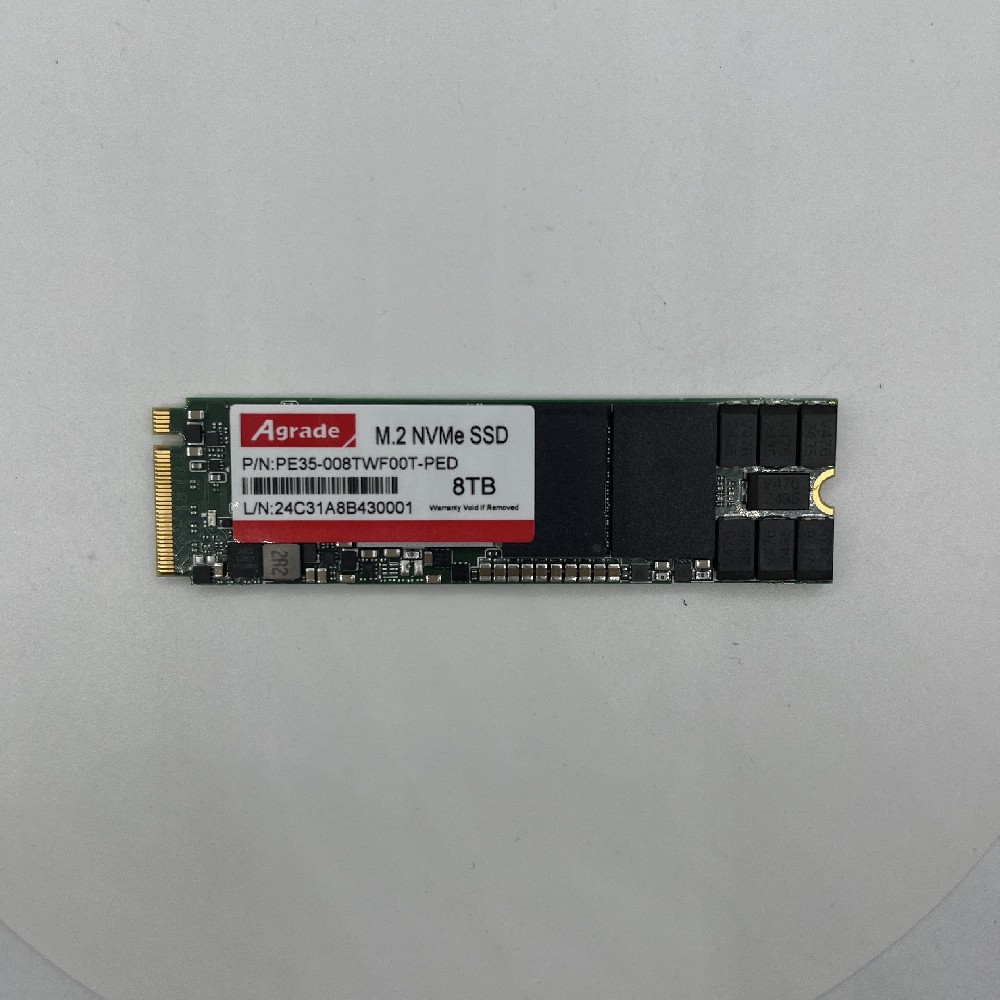
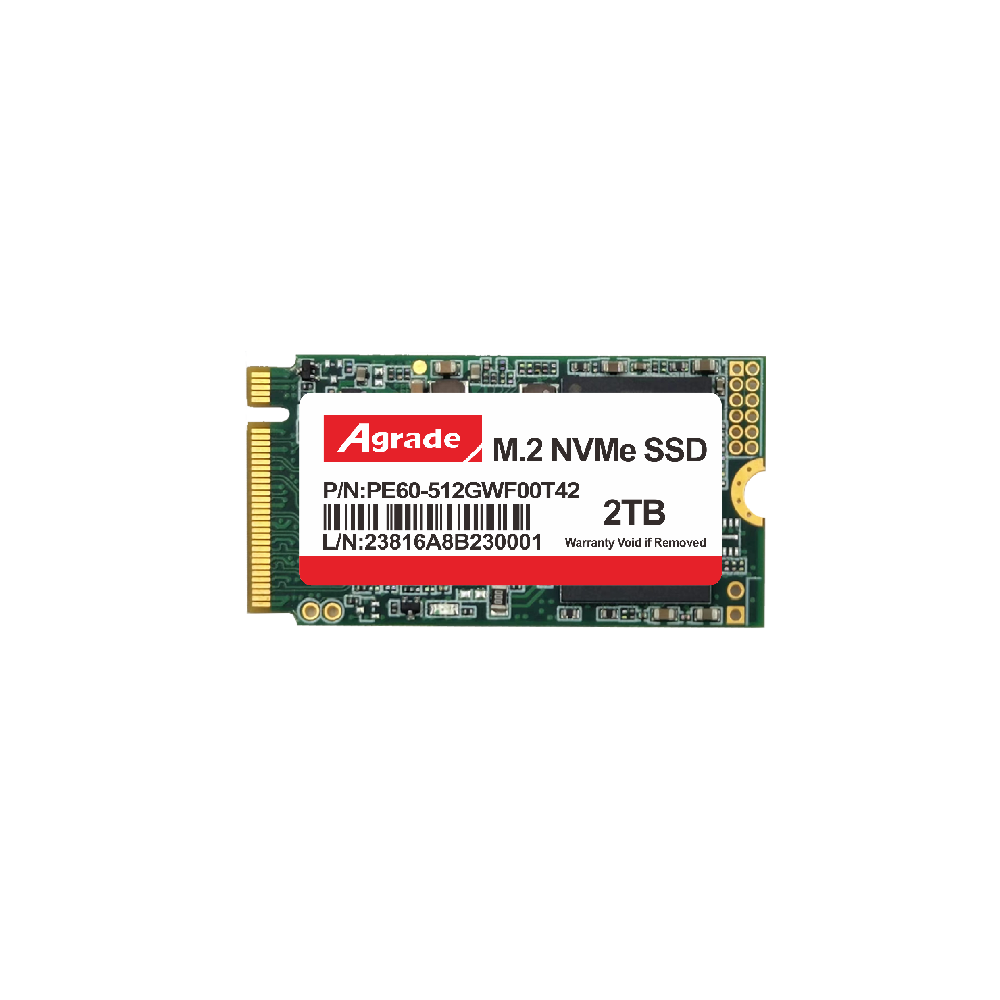
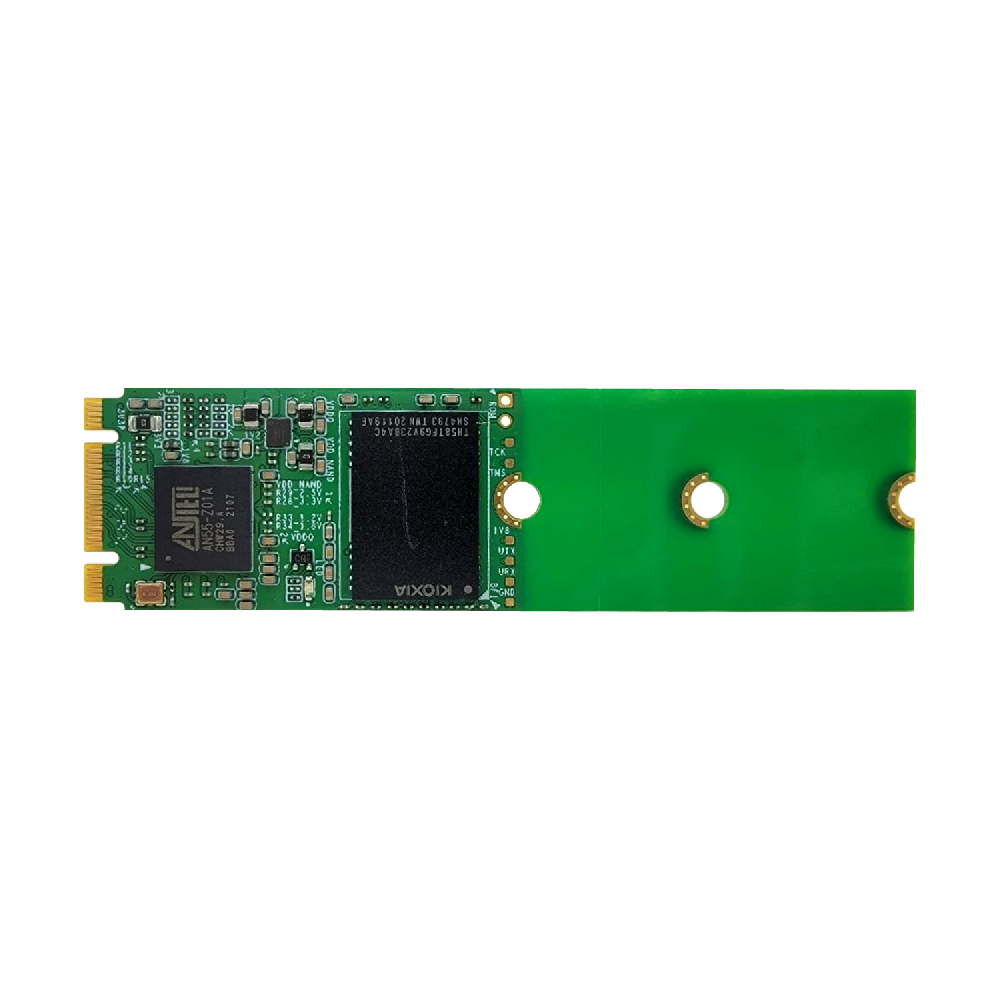
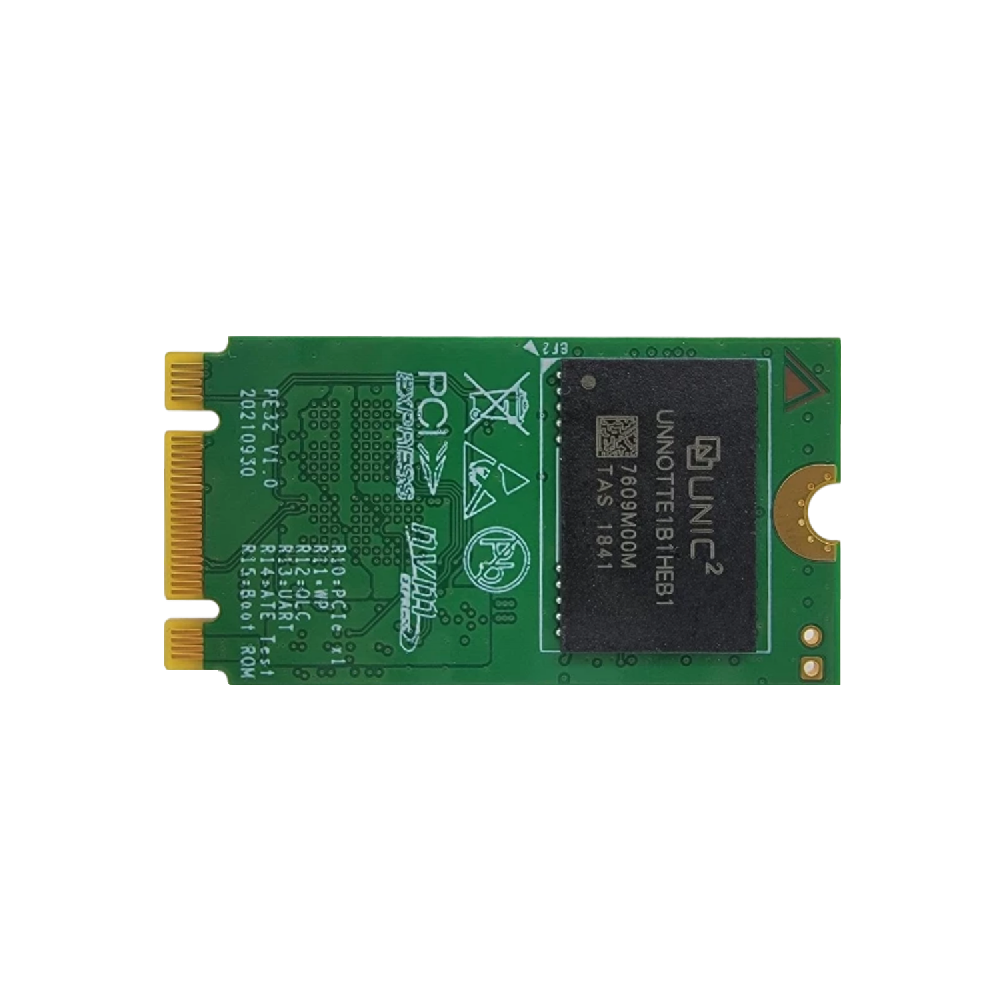
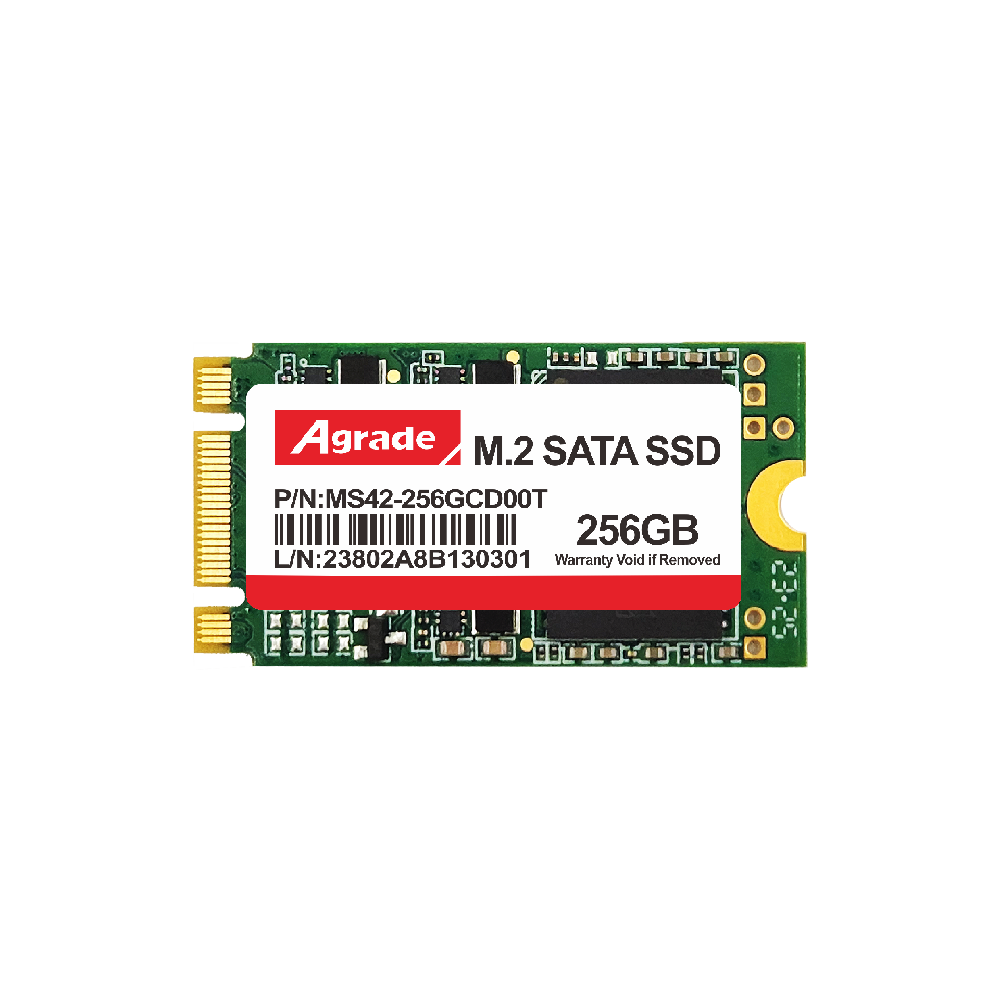
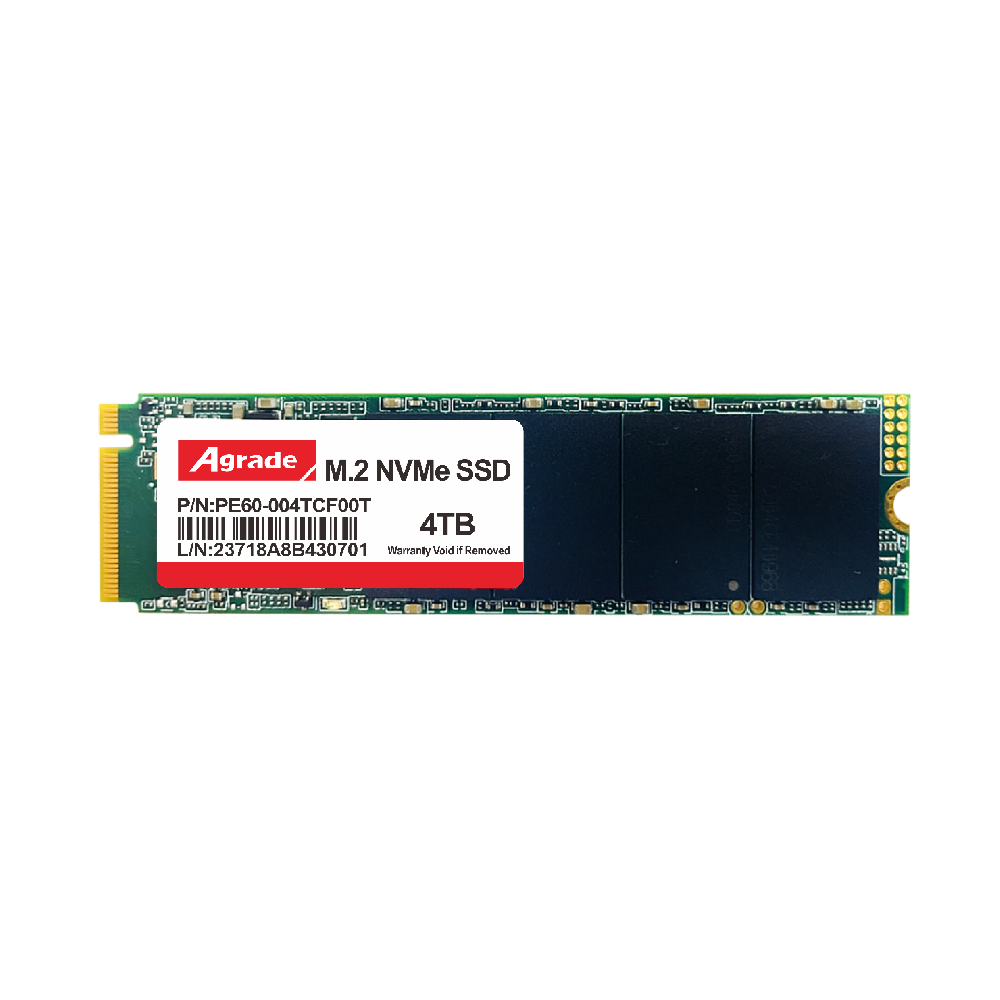
Form factor directly influences thermal behavior. A 2.5-inch SATA SSD has a larger surface area for heat dissipation than an M.2 2242 drive of the same capacity. However, M.2 drives are common in space-constrained industrial PCs. For M.2 industrial SSDs, look for models with a metal casing or a built-in heatsink. Some manufacturers offer SSDs with a graphene-based heat spreader that distributes heat evenly across the drive. In rugged environments, consider a half-slim or mSATA form factor with a full metal enclosure that can double as a heatsink. Agrade Storage's industrial SSD lineup includes both standard and custom form factors with enhanced thermal designs.
5. Monitor Temperature with S.M.A.R.T. Data
You cannot manage what you do not measure. All modern industrial SSDs support S.M.A.R.T. (Self-Monitoring, Analysis, and Reporting Technology) attributes, including temperature readings from the controller and NAND. Integrate these sensors into your system's health monitoring dashboard. Set up alerts if the temperature exceeds 65 degrees Celsius for extended periods. Also, track the minimum temperature: if the drive falls below -20 degrees Celsius, the NAND may require a warm-up period before reliable writes can occur. Agrade Storage provides a software toolkit that reads S.M.A.R.T. data and logs thermal history for predictive maintenance.
Practical Applications and Case Studies
Automated Guided Vehicles (AGVs)
In a warehouse, AGVs operate continuously under charging cycles that generate heat in both the battery and the onboard computer. One Agrade Storage customer deployed our industrial SSDs in AGVs that navigate freezer aisles (as cold as -30 degrees Celsius) and then immediately move to a charging station where ambient temperatures reach 40 degrees Celsius. By using an SSD with a wide temperature range and a thermal pad coupled to the chassis, the customer eliminated drive failures caused by thermal shock and condensation.
Edge AI and Video Analytics
Edge AI boxes that run video analytics for security or quality inspection generate substantial heat from the GPU and CPU. The industrial SSD in these devices must handle continuous 4K video writes while coexisting in a sealed, fanless enclosure. The solution was to select an M.2 2280 industrial SSD with a built-in aluminum heat spreader and to position the drive directly in the airflow path from the enclosure's passive cooling fins. This reduced the SSD's operating temperature by 12 degrees Celsius and doubled the expected write endurance.
Railway and In-Vehicle Systems
Transportation systems subject industrial storage to vibration, wide temperature swings, and limited airflow. In one railway project, the industrial SSD was mounted inside a control cabinet next to a power inverter. By adding a small heat pipe that transferred heat from the SSD to the cabinet wall, the peak temperature dropped from 80 degrees Celsius to 62 degrees Celsius. The system now meets the railway's 10-year maintenance-free requirement.
Conclusion
Thermal management is a critical design consideration for any application that relies on industrial storage. From PCB layout and thermal interface materials to dynamic throttling and form factor selection, every decision impacts the reliability and lifespan of the industrial SSD. By following the best practices outlined in this article, you can prevent overheating, avoid performance throttling, and extend the operational life of your storage solution. Agrade Storage is committed to providing industrial SSDs that are engineered for thermal resilience, backed by rigorous testing and customizable firmware options. Whether you are designing for a smart factory, a medical device, or an autonomous vehicle, we invite you to explore our industrial SSD portfolio and contact our engineering team for thermal simulation support.

-
Products
Advantages
-
Solutions
-
News
About us
-
Contact us
Tel:+86 19926658803
Whatsapp:+86 19926658803
lianle1210@163.com
Address: 30CF, Caihong Building, Caihong Road, Futian District, Shenzhen City, Guangdong Province, China


Friendly Links:
