












News


 Agrade Storage Editorial Team
  2026-05-16 16:11:41
 How to Extend the Lifespan of Industrial Memory Cards
Introduction
Industrial memory cards are the backbone of critical systems in manufacturing, automation, medical devices, and transportation. Unlike consumer-grade storage, these cards are engineered to endure extreme temperatures, vibration, and continuous read-write cycles. However, even the most rugged industrial storage solutions require proper care to achieve their full operational lifespan. In this article, we will explore proven methods to extend the lifespan of industrial memory cards, with insights from Agrade Storage, a leader in industrial storage technology. Whether you are managing an embedded system or a data logging application, these strategies will help you maximize reliability and reduce total cost of ownership.
Understanding the Anatomy of Industrial Memory Cards
To extend lifespan, it is essential to understand the core technology inside industrial memory cards. Most industrial cards use NAND flash memory, which has a finite number of program-erase (P/E) cycles. The two primary types are:
- Single-Level Cell (SLC): Stores one bit per cell, offering the highest endurance, typically rated for 50,000 to 100,000 P/E cycles. Ideal for write-intensive applications.
- Multi-Level Cell (MLC): Stores two bits per cell, balancing cost and endurance, usually rated for 3,000 to 10,000 P/E cycles. Suitable for most industrial workloads.
- Triple-Level Cell (TLC) and Quad-Level Cell (QLC): Used in consumer devices; not recommended for industrial applications due to lower endurance.
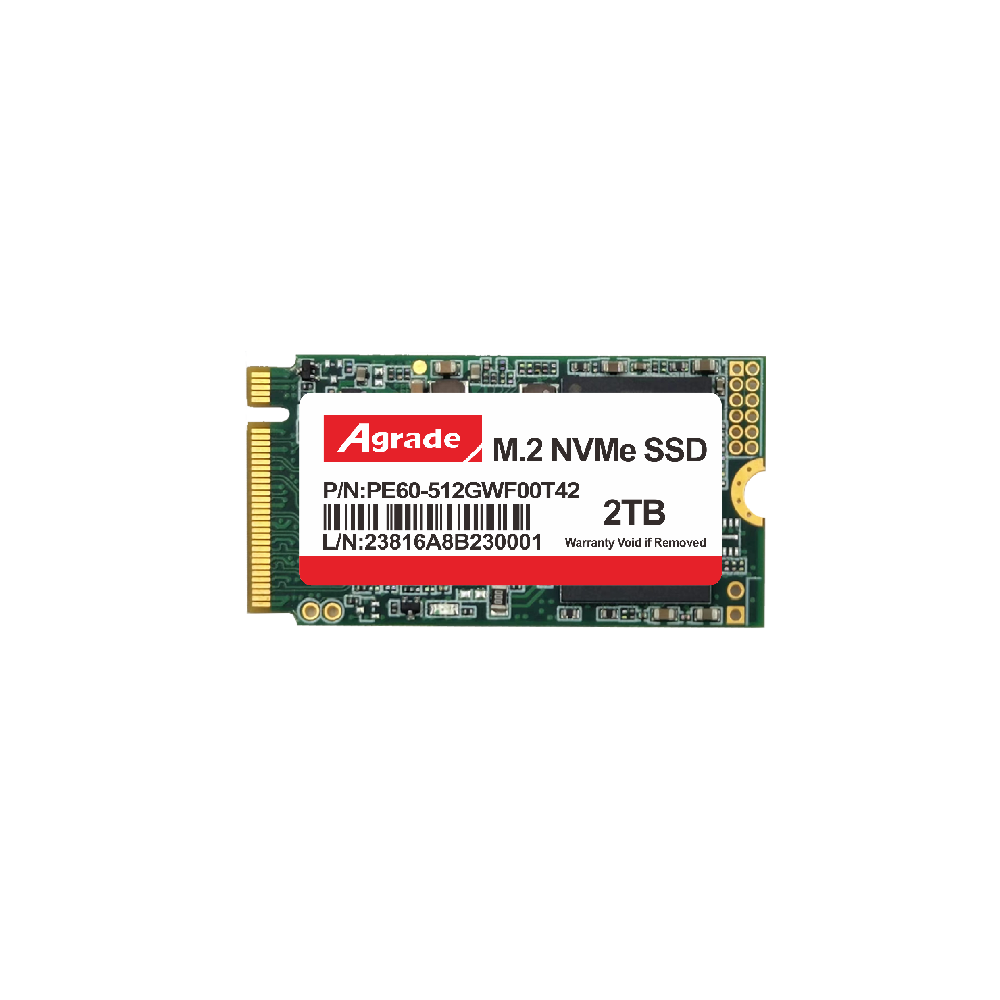
Industrial memory cards from Agrade Storage often utilize SLC or pSLC (pseudo-SLC) modes to deliver enhanced reliability. Additionally, they incorporate advanced wear-leveling algorithms and error correction code (ECC) to distribute writes evenly and recover from data corruption. Understanding these fundamentals helps you choose the right card for your specific industrial storage needs.
Key Factors That Affect Lifespan
Operating Temperature
Industrial memory cards are rated for wide temperature ranges, typically from -40°C to 85°C. Continuous exposure to temperatures at the extremes accelerates electron leakage in NAND cells, reducing data retention and endurance. To mitigate this, ensure proper thermal management in your system. Use heatsinks or active cooling if the device operates near the upper limit. Agrade Storage industrial SSDs and memory cards are tested for thermal shock and sustained high-temperature operation, but proactive ventilation still extends their life.
Write Amplification Factor (WAF)
Write amplification occurs when the flash controller rewrites more data than the host system intended. A high WAF increases wear on NAND cells. Factors that increase WAF include small random writes, fragmented file systems, and lack of trim support. To reduce WAF, use a file system optimized for flash memory (such as F2FS or ext4 with discard), and avoid frequent overwrites of the same logical block. Industrial storage solutions like those from Agrade Storage feature low-WAF firmware that minimizes this effect.
Power Cycles and Power Loss
Frequent power cycling stresses the memory card’s controller and can cause incomplete write operations. In industrial environments where sudden power loss is common, use cards with power-loss protection (PLP) circuits. These circuits use capacitors to flush the write cache to NAND during an outage. Agrade Storage offers industrial memory cards with robust PLP, ensuring data integrity even in unstable power conditions.
Practical Strategies for Extending Lifespan
1. Implement Wear-Leveling and Over-Provisioning
Wear-leveling ensures that write operations are distributed across all NAND blocks, preventing premature failure of heavily used cells. Most industrial cards have built-in wear-leveling, but you can enhance it by leaving additional unallocated space (over-provisioning). For example, if your application uses 80% of the card’s capacity, the remaining 20% acts as a reserve pool for the controller to manage wear. Agrade Storage recommends over-provisioning of at least 10-20% for write-intensive workloads.
2. Optimize Write Patterns
Batch small writes into larger transactions whenever possible. Instead of writing data byte by byte, accumulate data in a buffer and write it in blocks. This reduces the number of P/E cycles and lowers WAF. For logging applications, use circular buffers that overwrite the oldest data first, rather than deleting and rewriting files. This approach aligns with how industrial SSDs manage garbage collection.
3. Use Error Correction and Monitoring Tools
Modern industrial memory cards include self-monitoring, analysis, and reporting technology (SMART). Enable SMART monitoring to track parameters like remaining endurance, bad block count, and temperature. When a card approaches its rated endurance, you can replace it proactively. Agrade Storage provides software tools that integrate with your system to alert you when a card needs attention, reducing unexpected failures.
4. Choose the Right Card for the Workload
Not all industrial applications are the same. For read-only or rarely written data (e.g., firmware storage), a high-density MLC card may suffice. For frequent data logging or database writes, invest in SLC or pSLC cards from Agrade Storage. These cards offer 10x the endurance of standard MLC, making them cost-effective in the long run. Always match the card’s endurance rating to your application’s daily write volume (measured in terabytes written, or TBW).
5. Maintain Proper Firmware
Manufacturers periodically release firmware updates that improve wear-leveling algorithms, fix bugs, and enhance compatibility. Check for updates from your industrial storage provider regularly. Agrade Storage offers field-updatable firmware for its industrial memory cards, allowing you to deploy improvements without replacing hardware.
Practical Applications in Industrial Settings
Manufacturing Automation
In programmable logic controllers (PLCs) and robotic systems, memory cards store configuration data and operation logs. By using industrial SSDs with high endurance and implementing the strategies above, manufacturers have seen card lifespans exceed five years even in 24/7 operation. Agrade Storage cards are specifically designed for such environments, with reinforced connectors and conformal coating for dust and moisture resistance.
Transportation and Logistics
In-vehicle data recorders and GPS trackers face constant vibration and temperature swings. Using industrial memory cards with wide temperature ratings and vibration resistance is critical. For example, a fleet management company using Agrade Storage industrial microSD cards reported a 40% reduction in card failures after switching from consumer-grade cards and implementing write optimization techniques.
Medical Devices
Medical equipment such as patient monitors and diagnostic imaging systems require absolute data integrity. Power-loss protection and error correction are non-negotiable. By leveraging Agrade Storage’s industrial storage solutions, medical device manufacturers ensure compliance with strict regulatory standards while extending the operational life of their storage media.
Conclusion
Extending the lifespan of industrial memory cards is not just about buying the most expensive hardware; it requires a holistic approach that includes proper selection, configuration, and maintenance. By understanding NAND flash technology, controlling environmental factors, optimizing write patterns, and using monitoring tools, you can significantly prolong the life of your industrial storage. Agrade Storage remains committed to providing high-reliability industrial SSDs and memory cards that meet the demands of the harshest environments. Remember, a small investment in best practices today can save you from costly downtime and data loss tomorrow. For more information on industrial storage solutions, explore Agrade Storage’s product line and technical resources.

-
Products
Advantages
-
Solutions
-
News
About us
-
Contact us
Tel:+86 19926658803
Whatsapp:+86 19926658803
lianle1210@163.com
Address: 30CF, Caihong Building, Caihong Road, Futian District, Shenzhen City, Guangdong Province, China


Friendly Links:
