












News


 电商部
电商部  2026-01-21 10:30:09
 Industrial-grade CFast Card: Technical Specifications, Applications and Advantages
In industrial control, embedded systems, high-definition monitoring and other industrial scenarios, the surge in data volume and the improvement of processing speed have put forward dual stringent requirements for high-speed read-write capabilities and stable operation of storage devices. Traditional industrial SD cards, while possessing a certain degree of stability, have limited read-write speeds and cannot meet the needs of high-frequency data writing and high-definition video direct writing. Industrial-grade CFast cards, relying on the high-speed transmission advantages of SATA III interfaces, balance extreme speed and industrial-grade reliability, becoming the preferred high-speed storage solution for industrial scenarios.
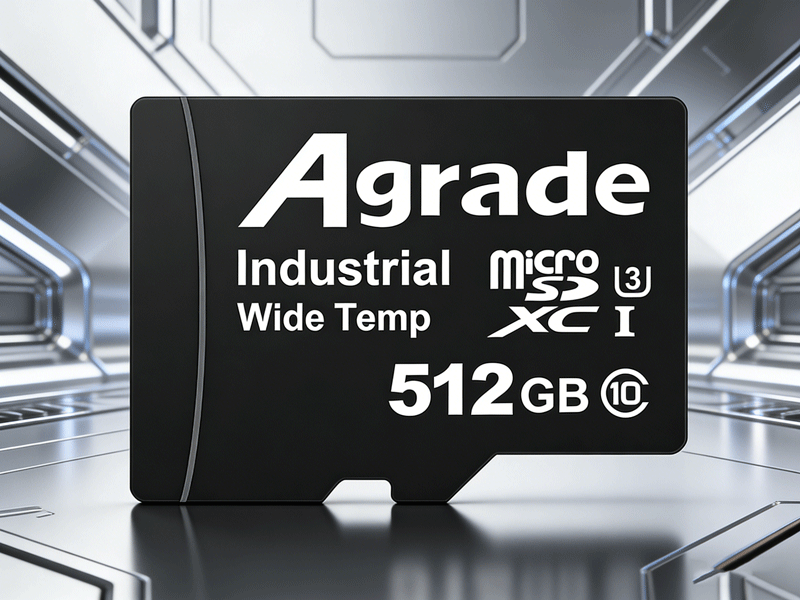
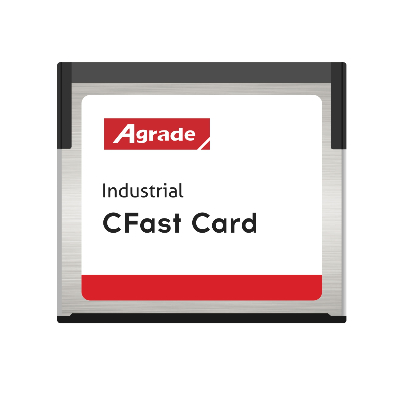
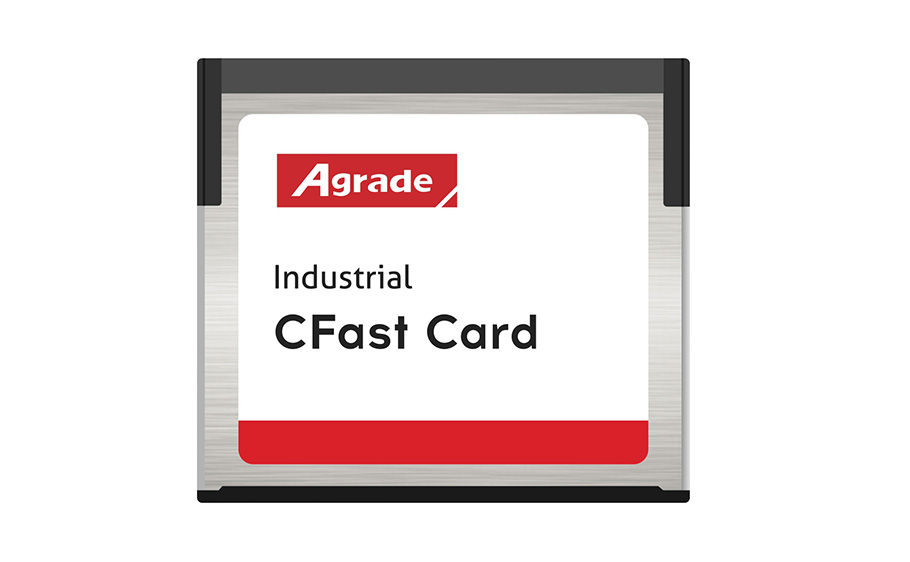
Industrial-grade CFast cards comply with the CFast2.0 specification and are compatible with the SATA III 6.0Gb/s transmission standard. Compared with the UHS-I interface of traditional industrial SD cards (with a maximum transmission rate of 104Mb/s), the transmission bandwidth is greatly increased, and read-write performance has achieved a qualitative leap. Mainstream industrial-grade CFast cards have a read speed of over 500MB/S and a write speed of 280MB/S. Some high-end models even exceed 600MB/S in read speed, enabling efficient processing of high-frequency writing scenarios such as high-definition surveillance videos, industrial equipment operation logs, and medical imaging data.
The core competitiveness of industrial-grade CFast cards lies in the perfect balance between high-speed performance and industrial-grade durability, not just pursuing speed. In flash memory selection, high-quality SLC or MLC NAND flash memory is adopted. SLC versions offer a P/E cycle count of over 60,000 times, and MLC versions can reach 15,000 times. Combined with global wear-leveling technology, service life is greatly extended. They are also equipped with advanced ECC error correction technology and power-fail protection to ensure data security.
In terms of physical protection, they pass 1500G shock resistance and 20G vibration tests, resisting mechanical interference during industrial equipment operation. Wide-temperature versions support -40℃ to 85℃ operation, adapting to extreme industrial environments. The compact size (42.8mm×36.4mm×3.3mm) fits the embedded needs of industrial equipment, with flexible capacity options from 4GB to 512GB. The MTBF reaches 2 million hours, and S.M.A.R.T intelligent monitoring is supported for real-time health feedback. When selecting, confirm SATA III interface compatibility to avoid compatibility issues.

-
Products
Advantages
-
Solutions
-
News
About us
-
Contact us
Tel:+86 19926658803
Whatsapp:+86 19926658803
lianle1210@163.com
Address: 30CF, Caihong Building, Caihong Road, Futian District, Shenzhen City, Guangdong Province, China


Friendly Links:
