



















News


 电商部
电商部  2026-03-09 11:55:55
 Core Technical Principles of Wide Temperature M.2 NVMe: Why It Works in Extreme Temperatures
Wide Temperature M.2 NVMe drives are not just standard M.2 NVMe drives with a “wide temperature” label—they are engineered from the ground up to withstand extreme thermal conditions through a combination of specialized hardware, firmware optimizations, and rigorous testing. Understanding the core technical principles that enable this temperature tolerance is essential for anyone working with these drives, as it helps explain why they are more reliable in harsh environments and how to maximize their performance. In this article, we’ll dive into the key technical components and mechanisms that make Wide Temperature M.2 NVMe drives suitable for extreme temperatures.

At the heart of a Wide Temperature M.2 NVMe drive is the NAND flash memory, which is responsible for storing data. Unlike consumer-grade NAND flash, which is made from standard wafers, industrial-grade NAND flash used in Wide Temperature M.2 NVMe drives is manufactured using high-quality wafers that undergo strict screening processes. These wafers are tested at extreme temperatures to eliminate any units that show instability, ensuring that only the most reliable chips are used. Additionally, the NAND flash memory is optimized with a special cell structure that reduces charge leakage at high temperatures and prevents charge loss at low temperatures, which are common issues that cause data corruption in standard drives.
The controller is another critical component that enables wide temperature operation. The controller acts as the “brain” of the drive, managing data transfer between the NAND flash and the host device. In Wide Temperature M.2 NVMe drives, the controller is designed with temperature compensation circuits that adjust its operating voltage and clock frequency in response to changes in ambient temperature. For example, when the temperature drops below -30°C, the controller increases the operating voltage slightly to ensure that the NAND flash cells can be read and written reliably. When the temperature exceeds 75°C, the controller reduces the clock frequency to minimize heat generation, preventing overheating and performance degradation.
Firmware optimization is also a key factor in the temperature tolerance of Wide Temperature M.2 NVMe drives. The firmware is the software that runs on the controller, and it includes advanced algorithms for temperature monitoring, error correction, and power management. Most Wide Temperature M.2 NVMe drives feature real-time temperature monitoring, which continuously tracks the drive’s internal temperature and adjusts its operation accordingly. For example, if the temperature approaches the upper limit, the firmware may temporarily reduce the write speed to reduce heat output. If the temperature drops to the lower limit, the firmware may activate a pre-heating mechanism to ensure that the NAND flash cells are ready for operation.
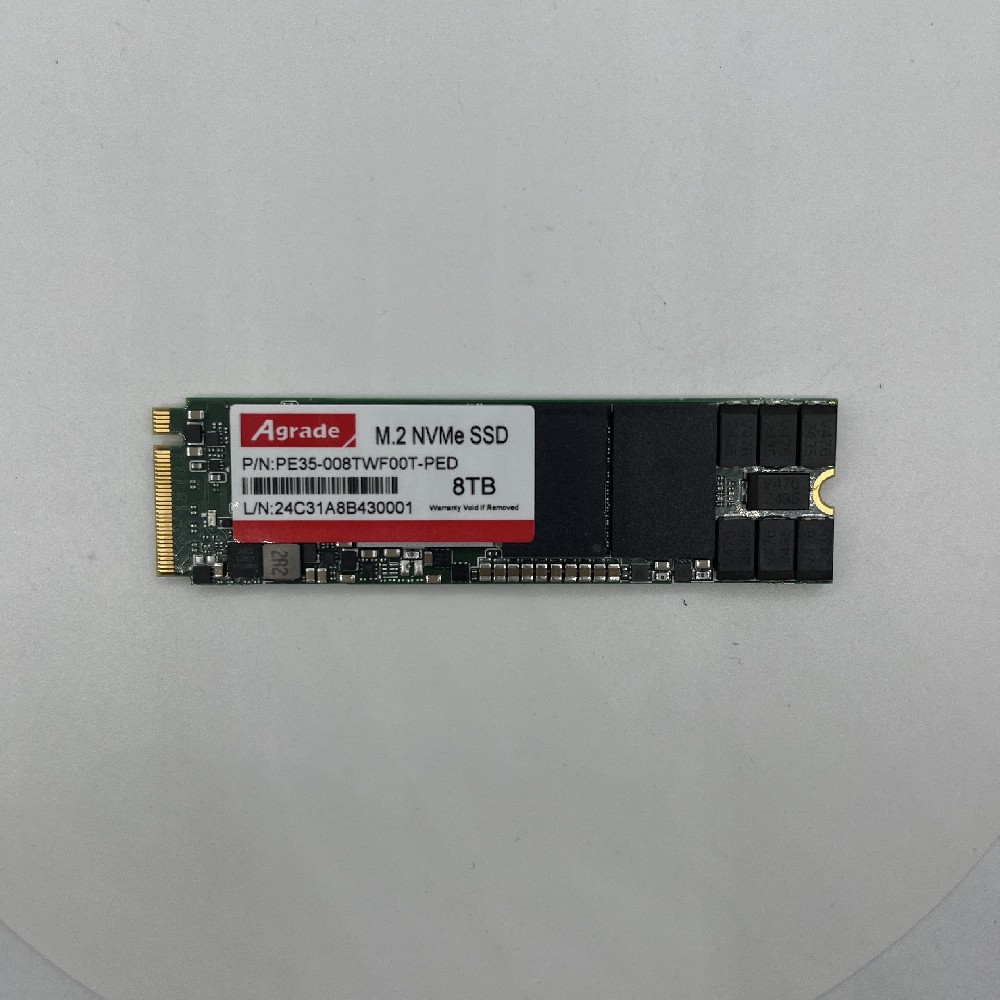
Hardware design optimizations further enhance the temperature tolerance of these drives. The PCB (Printed Circuit Board) is made from thicker, more durable materials that can withstand thermal expansion and contraction without cracking. The components are soldered using high-temperature solder that remains stable even at 85°C or higher, preventing component detachment. Some drives also include a metal heat sink or thermal pad to dissipate heat more effectively, which is particularly important in high-temperature environments. Additionally, the drive’s enclosure is often designed to be shock-resistant and vibration-resistant, which helps protect the internal components from damage in harsh industrial or automotive environments.
Finally, all Wide Temperature M.2 NVMe drives undergo rigorous testing to ensure their reliability in extreme temperatures. This includes extended high-temperature testing (e.g., 1000 hours at 85°C) and low-temperature testing (e.g., 1000 hours at -40°C), as well as temperature cycling tests (alternating between high and low temperatures) to simulate real-world conditions. These tests ensure that the drives can perform reliably for years in even the harshest environments.

-
Products
Advantages
-
Solutions
-
News
About us
-
Contact us
Tel:+86 19926658803
Whatsapp:+86 19926658803
lianle1210@163.com
Address: 30CF, Caihong Building, Caihong Road, Futian District, Shenzhen City, Guangdong Province, China


Friendly Links:
