












News


 电商部
电商部  2026-03-16 17:36:51
 ide Temperature 2.5-inch SSD Buying Guide: How to Read Technical Parameters?
For users with storage needs in extreme environments, when purchasing a wide temperature 2.5-inch SSD, they cannot only focus on the brand and price but also pay attention to the core technical parameters, because the parameters directly determine the product’s temperature resistance, performance, and reliability. Many users are easily misled by merchants because they do not understand the meaning of parameters, and purchase products that do not meet the scenario needs. This article will sort out the core purchasing parameters of wide temperature 2.5-inch SSDs, teaching you to read the parameters and choose the right product to avoid pitfalls.
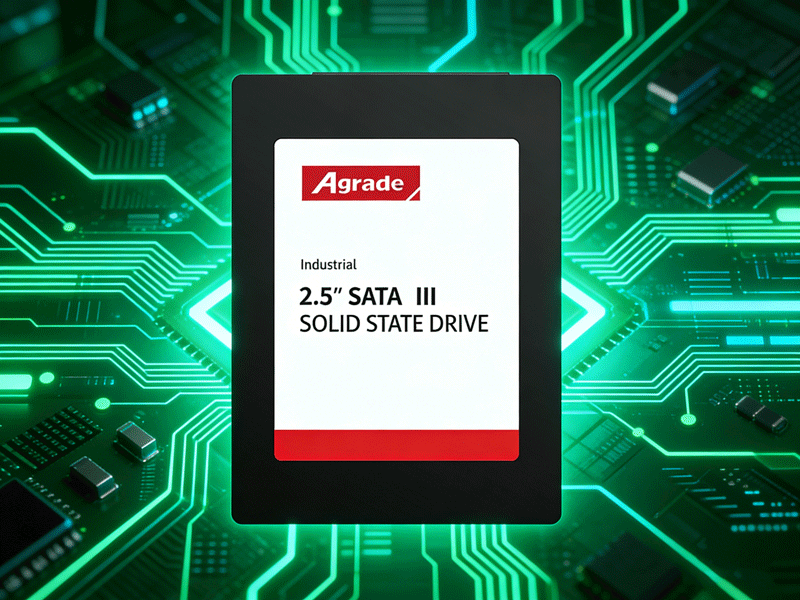
The first core parameter: Operating Temperature Range. This is the most critical parameter of wide temperature 2.5-inch SSDs, directly determining the applicable scenario of the product, and should be focused on when purchasing. The parameter is usually marked as "-XX°C to XX°C", with common ones being -20°C to 70°C (entry-level), -40°C to 85°C (standard industrial-grade), and -55°C to 125°C (military-grade). When purchasing, you need to select a product whose operating temperature covers the scenario temperature according to the actual temperature range of your own scenario. It is recommended to reserve a redundancy of 5-10°C to avoid device failure caused by ambient temperature fluctuations exceeding the product’s adaptation range. At the same time, confirm whether the product has an authoritative temperature test report to avoid false labeling.
The second core parameter: Flash Memory Chip Type. Flash memory chips directly affect the product’s temperature resistance, write life, and data reliability. The common types are TLC, MLC, and pSLC. Among them, pSLC chips have the strongest temperature resistance and the longest write life, suitable for industrial scenarios with high load and high reliability requirements, but the price is higher. MLC chips have moderate temperature resistance and write life, with moderate cost performance, suitable for most industrial scenarios. TLC chips have a lower price but relatively weaker temperature resistance and write life, suitable for mild extreme scenarios with low requirements on performance and life. When purchasing, select the appropriate chip type according to the load requirements and budget of the scenario.
The third core parameter: MTBF (Mean Time Between Failures). This parameter indicates the average time that the product can operate without failure under normal working conditions, in hours. The higher the value, the stronger the reliability of the product. The MTBF of wide temperature 2.5-inch SSDs is usually more than 2 million hours, and some high-end products can reach more than 3 million hours, while the MTBF of ordinary 2.5-inch SSDs is only about 1 million hours. When purchasing, it is recommended to select products with MTBF ≥ 2 million hours to ensure that they can adapt to the long-term continuous operation needs of industrial scenarios.
The fourth core parameter: Read/Write Speed. The read/write speed of wide temperature 2.5-inch SSDs should be selected according to the scenario needs, and there is no need to blindly pursue high speed. For scenarios that require high-speed data transmission such as industrial automation and data acquisition, it is recommended to select products with sequential read speed ≥ 550MB/s and sequential write speed ≥ 500MB/s. For scenarios with low speed requirements such as ordinary monitoring and car navigation, sequential read/write speed ≥ 400MB/s can meet the needs.
At the same time, pay attention to the stability of read/write speed in extreme temperatures. Some products have a significant drop in read/write speed in high or low temperature environments. When purchasing, pay attention to the performance test data of the product in extreme temperatures provided by the merchant. The fifth core parameter: Protection Performance. Wide temperature 2.5-inch SSDs are usually used in complex industrial scenarios, so protection performance is also very important. Focus on shock resistance, vibration resistance, dust and moisture resistance parameters. It is recommended to select products with shock resistance ≥ 15G and vibration resistance ≥ 20G, which can effectively avoid damage caused by shock and vibration during transportation, installation, and operation of the device. If the scenario has dust and moisture resistance requirements, you can select products with sealed packaging to further improve the reliability of the device.

-
Products
Advantages
-
Solutions
-
News
About us
-
Contact us
Tel:+86 19926658803
Whatsapp:+86 19926658803
lianle1210@163.com
Address: 30CF, Caihong Building, Caihong Road, Futian District, Shenzhen City, Guangdong Province, China


Friendly Links:
