














News


 电商部
电商部  2026-02-06 18:30:59
 Wide Temperature DDR4 vs Standard DDR4: 4 Core Differences You Must Know
Wide Temperature DDR4 and standard consumer-grade DDR4 look similar in appearance, but they are very different in practical applications. Standard DDR4 may fail within a few minutes in harsh industrial environments, while Wide Temperature DDR4 can operate stably for years. Many people confuse the two, leading to frequent equipment failures due to blind selection. This article will comprehensively analyze the core differences between Wide Temperature DDR4 and standard DDR4 from four key dimensions, helping you accurately distinguish them and select the right memory product according to your application scenario.
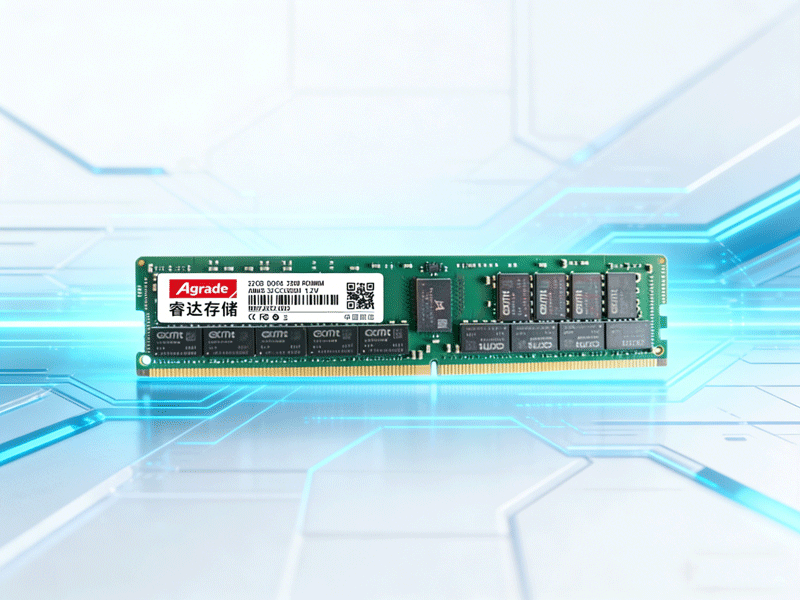
The first core difference is temperature adaptability, which is also the core advantage of Wide Temperature DDR4. As mentioned earlier, standard consumer-grade DDR4 has an operating temperature range of only 0°C to 85°C, which is designed for indoor normal temperature environments and cannot adapt to extreme temperature changes. In high-temperature environments above 85°C, standard DDR4 will experience serious chip leakage, data loss, and even chip burnout; in low-temperature environments below 0°C, its internal electronic activity will slow down, leading to failure to start, reduced data transmission rate, and even permanent hardware damage.
In contrast, Wide Temperature DDR4 has undergone comprehensive optimization in chip and production technology, with an operating temperature range of -40°C to 85°C or even wider. It can maintain stable performance in extreme environments such as outdoor high-temperature exposure, northern severe cold, and industrial high-temperature workshops, and there will be no obvious performance degradation or hardware failure due to temperature changes. This is the most fundamental difference between the two and the key reason why Wide Temperature DDR4 can be applied to industrial scenarios.
The second difference is hardware material selection and process standards. Standard DDR4 adopts consumer-grade chips and components, with low material selection costs and production processes focusing on cost performance. It does not need to undergo strict environmental tests, and its quality control standards are relatively loose, which can only meet the needs of daily use in normal environments. Wide Temperature DDR4, on the other hand, uses industrial-grade core components throughout, including original industrial-grade wide-temperature particles, high-temperature-resistant capacitors and resistors, and some products also add anti-sulfurization protective layers and conformal coatings to improve environmental adaptability.
In the production process, Wide Temperature DDR4 needs to undergo multiple strict tests, such as temperature shock test (-40°C to 125°C cyclic impact), vibration test, electromagnetic interference test, and humidity test, to ensure that it can maintain stable performance in harsh environments. These strict material selection and production standards make the reliability of Wide Temperature DDR4 far higher than that of standard DDR4, but also lead to a higher production cost.
The third difference is reliability and service life. Standard DDR4 has a design life of 3 to 5 years, and can only maintain stability in normal temperature and low-load environments. Under long-term high-load operation or extreme temperature conditions, it is prone to problems such as chip aging, solder joint detachment, and performance degradation. Wide Temperature DDR4 is designed for industrial scenarios that require long-term stable operation, with a design life of 5 to 10 years, supporting 24/7 uninterrupted high-load operation.
It has the characteristics of shock resistance, thermal shock resistance, corrosion resistance, and anti-electromagnetic interference, which can adapt to the harsh working environment of industrial equipment and reduce the frequency of maintenance and replacement. The fourth difference is application scenarios and price. Standard DDR4 is mainly targeted at the consumer market, with a low price, suitable for desktop computers, laptops, office servers, and other consumer electronic devices. Wide Temperature DDR4 is mainly targeted at the industrial market, with high technical thresholds and prices much higher than standard DDR4, suitable for industrial automation, automotive electronics, military, and other harsh environment scenarios.

-
Products
Advantages
-
Solutions
-
News
About us
-
Contact us
Tel:+86 19926658803
Whatsapp:+86 19926658803
lianle1210@163.com
Address: 30CF, Caihong Building, Caihong Road, Futian District, Shenzhen City, Guangdong Province, China


Friendly Links:
