




























News


 电商部
电商部  2026-02-06 18:31:53
 Working Principle of Wide Temperature DDR4: Secrets of Stable Operation in Extreme Environments
Many people are curious about why Wide Temperature DDR4 can operate stably in extreme environments such as -40°C severe cold and 85°C high temperature, while standard DDR4 will have problems such as startup failure and data loss. In fact, this is not simply supported by "temperature-resistant materials," but by full-process technical optimization based on the memory operation principle. This article will use simple language to break down the core working principle of Wide Temperature DDR4, revealing the underlying logic of its stable operation in extreme environments and helping you deeply understand the technical hard power of industrial-grade memory.

The core working principle of Wide Temperature DDR4 is essentially based on the "storage-reading-transmission" process of standard DDR4 memory, and solves the impact of extreme temperatures on memory operation through three key technical optimizations. The first is the temperature adaptation optimization at the chip level. As mentioned earlier, Wide Temperature DDR4 uses special wide-temperature memory particles, which are designed with special semiconductor processes to adjust the structure of transistors inside the chip, making them able to maintain stable electronic activity within a wide temperature range.
At low temperatures, the导通 resistance of transistors in standard DDR4 will increase, and electronic activity will slow down, leading to difficulty in starting and reduced data transmission rate. The wide-temperature particles optimize the transistor structure to reduce the导通 resistance at low temperatures, ensuring that electrons can move quickly and the memory can start normally. At high temperatures, the transistors in standard DDR4 will leak seriously, leading to data loss and chip burnout. The wide-temperature particles have better thermal stability, which can reduce the leakage current at high temperatures and ensure the stable operation of the chip.
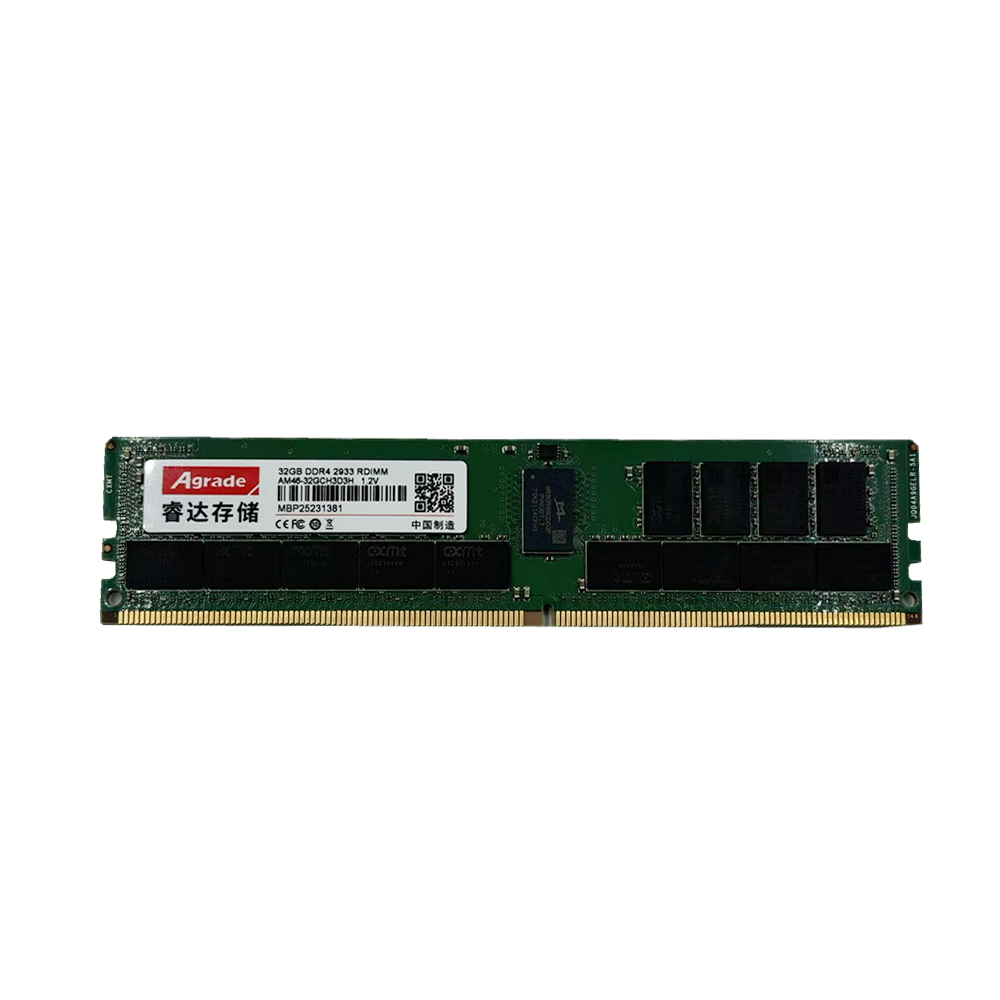
The second is the stability optimization of signal transmission. Extreme temperatures will cause thermal expansion and contraction of the memory PCB board and gold fingers, which will affect the contact between the gold fingers and the motherboard interface, leading to poor signal transmission or signal interference. Wide Temperature DDR4 solves this problem through two key technologies: first, it adopts a 30μ gold-plated finger design. Gold has excellent conductivity and oxidation resistance, which can reduce the impact of temperature changes on contact resistance, ensure good contact between the memory and the motherboard, and reduce signal loss.
Second, some high-end Wide Temperature DDR4 products use Underfill bottom filling technology, which fills the gap between the chip and the PCB board with a special adhesive. This technology can strengthen the solder joint strength, avoid solder joint detachment due to thermal expansion and contraction, and at the same time enhance the shock resistance and vibration resistance of the memory, preventing signal transmission failure caused by equipment vibration in industrial scenarios.
The third is the dynamic adjustment of power consumption and heat dissipation. Wide Temperature DDR4 has a built-in temperature sensor that can real-time monitor the operating temperature of the memory. Combined with the temperature-compensated refresh technology, it can dynamically adjust the refresh frequency to adapt to temperature changes. When the temperature is high, the refresh cycle is shortened to avoid data loss due to chip leakage; when the temperature is low, the refresh cycle is extended to reduce power consumption and heat generation, avoiding hardware damage caused by excessive temperature difference.
In addition, the selection of industrial-grade components further improves the stability of Wide Temperature DDR4. For example, capacitors that can withstand temperatures up to 125°C can ensure stable voltage supply at high temperatures, avoiding memory failures caused by voltage fluctuations; precision resistors with low error rates can ensure accurate circuit transmission, reducing signal interference and data errors. These technologies work together to enable Wide Temperature DDR4 to maintain stable operation in extreme environments.

-
Products
Advantages
-
Solutions
-
News
About us
-
Contact us
Tel:+86 19926658803
Whatsapp:+86 19926658803
lianle1210@163.com
Address: 30CF, Caihong Building, Caihong Road, Futian District, Shenzhen City, Guangdong Province, China


Friendly Links:
